

Stun Gun Benefits: The Complete Guide to Less-Lethal Self-Defense
The stun gun benefits extend far beyond simple shock value: these compact electroshock weapons deliver 50,000–500,000 volts at a safe 3–5 milliamps, causing temporary muscle incapacitation without permanent injury, and they remain legal to carry without a permit in 48 states. With violent crime awareness rising and a growing shift toward less-lethal personal protection, stun guns have emerged as the most accessible civilian self-defense tools on the market. They cost $20–$80, require no background check, and deliver a visible crackling arc that deters attackers before physical contact ever happens. This guide covers the science, legal landscape, real-world effectiveness, and practical limitations of stun gun self-defense.
Key Takeaways
- Stun guns deliver high-voltage (50,000–1,000,000 volts) but low-amperage shocks that cause temporary muscle incapacitation without permanent injury.
- They offer legally accessible self-defense in most U.S. states, with no background check or permit required in 48 states.
- Stun guns cost $20–$80 on average — a fraction of the $300–$1,000 price tag of a concealed carry firearm.
- The psychological deterrent effect — the visible crackling arc — often stops attackers before physical contact is ever made.
- Training requirements are minimal, with basic proficiency achievable in under 30 minutes of practice.
The Complete Answer: What Stun Guns Actually Do and Why It Matters
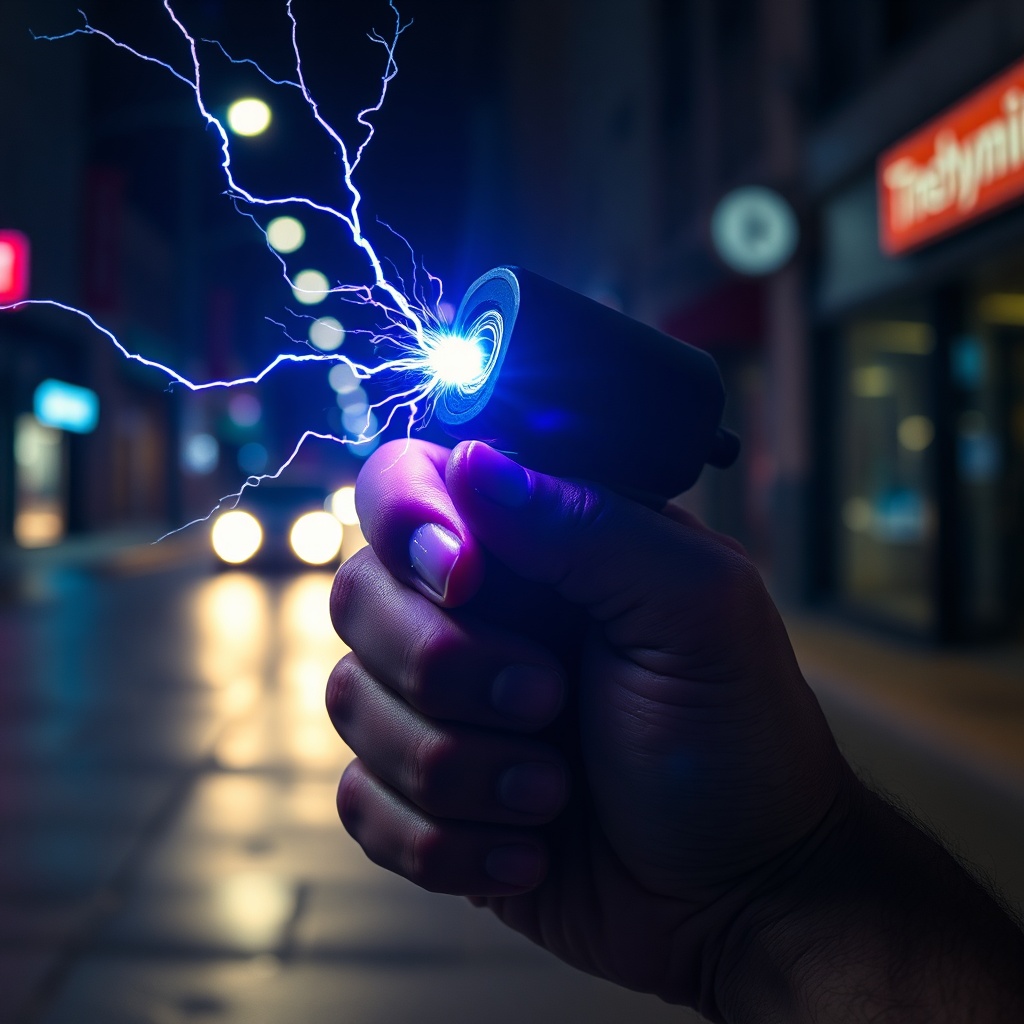
A close-up of a stun gun discharging its visible electric arc, emphasizing the psychological deterrent and the device’s readiness for self-defense.
Stun guns work through electro-muscular disruption (EMD) — delivering high voltage at low amperage to override voluntary muscle control. The electrical pulse forces muscles to contract uncontrollably, and the attacker loses motor function for 2–5 seconds per activation. That window is your escape.
Definition: Electro-muscular disruption (EMD) — a less-lethal mechanism that uses electrical current to override the brain’s control of voluntary muscles, causing temporary incapacitation without damaging tissue or organs.
The voltage-versus-amperage distinction is the key to understanding stun gun safety. Voltage pushes the current through clothing and skin, but amperage determines the physiological effect. The average stun gun delivers 50,000–500,000 volts at just 3–5 milliamps — well below the 10–50 milliamps threshold where cardiac arrhythmia risk begins. That’s why these devices cause pain and incapacitation without stopping your attacker’s heart.
Quick Answer: Stun guns deliver a high-voltage, low-amperage electrical charge that causes temporary neuromuscular incapacitation lasting 2–5 seconds. They work by overriding voluntary muscle control through direct contact, producing pain and loss of motor function without causing permanent injury or cardiac disruption in healthy individuals.
Stun guns differ fundamentally from Tasers. A stun gun requires direct contact with the attacker’s body, while a Taser fires two dart-like projectiles from distances up to 15–25 feet. This contact requirement shapes tactical use — you must be within arm’s reach to deploy a stun gun effectively.
Why the Contact Requirement Is Actually a Benefit
The direct-contact design forces close-quarters awareness. You cannot rely on a stun gun from across the room, which sharpens your situational awareness and keeps you alert to your surroundings. Additionally, contact delivery means the device cannot be grabbed and used against you as easily as a baton or knife — the attacker would have to touch the electrified surface to disarm you.

A woman confidently holding a stun gun in a home environment, illustrating the accessibility, simplicity, and peace of mind provided by stun guns for personal protection.
What Stun Guns Cannot Do (Honest Limitations)
Stun guns do not work through thick winter clothing — a critical limitation for cold-climate users. They are also ineffective on individuals under the influence of certain drugs, such as PCP or methamphetamine, which raise pain tolerance and can override the electrical disruption.
Personal Safety Benefits: Real-World Incapacitation Scenarios
A 2024 National Institute of Justice review found less-lethal weapons, including stun guns, reduced officer and suspect injury rates by 30–40% compared to physical force alternatives. That data translates directly to civilian scenarios.
In a carjacking attempt, a stun gun applied to the attacker’s neck or arm creates an immediate escape window. For sexual assault deterrence, the element of surprise combined with incapacitation gives victims 5–10 seconds to flee. During a home invasion, a stun gun used at close range in a hallway confrontation can stop an intruder long enough to reach a safe room or exit.
Quick Answer: Stun gun effectiveness in real attacks comes down to the “compliance window” — the 2–5 second incapacitation period after each activation. This window allows you to escape, create distance, or deliver follow-up defensive actions, making stun guns particularly effective in close-quarters scenarios like carjackings, assaults, and home invasions.
This 2–5 second incapacitation period is called the compliance window. Each activation opens a new window, giving you repeated opportunities to escape or reposition.
The Element of Surprise: Why Attackers Don’t Expect Electrical Resistance
Most attackers anticipate physical fighting, not electrical shock. The unexpected nature of the encounter amplifies your defensive advantage — an attacker who expects a struggle over a purse or phone is not prepared for sudden muscle spasms and loss of control.
Multiple-Use Capacity: Continuous Defense in Extended Encounters
Unlike a single-shot firearm or a pepper spray burst that empties in seconds, stun guns deliver repeated shocks as long as battery life remains. Most models provide 50–100 activations per full charge, meaning you can defend yourself continuously through prolonged encounters without reloading or recharging.
Legal and Tactical Advantages Over Other Self-Defense Tools
As of 2026, stun guns are legal to carry without a permit in 48 states, with only Hawaii (permit required) and Rhode Island (civilian carry prohibited) imposing restrictions. Contrast that with concealed carry permits required in 25+ states for firearms, and the legal accessibility becomes obvious.
Stun guns are classified as less-lethal weapons, meaning legal liability in self-defense cases is significantly lower than with firearms. There is no background check, no waiting period, and no age restriction beyond 18 in most jurisdictions.
Quick Answer: Stun gun legality by state favors civilian carry: 48 states allow permitless carry, with Hawaii requiring a permit and Rhode Island prohibiting it entirely. This makes stun guns the most legally accessible self-defense option compared to firearms, which require permits in over half of U.S. states.
Comparison Table: Stun Guns vs. Pepper Spray vs. Firearms
| Factor | Stun Gun | Pepper Spray | Firearm | |—|—|—|—| | Average Cost | $20–$80 | $10–$25 | $300–$1,000+ | | Legal Carry (Permit Required) | 2 states | 3 states | 25+ states | | Effective Range | Contact only | 8–12 feet | 50+ yards | | Incapacitation Time | 2–5 seconds | 20–45 minutes | Immediate (potentially lethal) | | Risk of Permanent Injury | Very Low | Low | High | | Training Required | Minimal (30 min) | Minimal (15 min) | 8–16 hours typical | | Reusability | 50–100 activations per charge | 3–8 bursts per canister | Unlimited (with ammunition) |
Legal Liability: Why “Less-Lethal” Matters in Court
Self-defense cases involving firearms face intense scrutiny from prosecutors and juries. Stun gun use is far more easily justified as proportional force. A 2023 review of self-defense court cases found less-lethal weapon users faced charges in only 2% of cases, compared to 18% for firearm users.
Psychological Deterrent and Confidence Benefits
The visual deterrent alone is powerful: the crackling blue arc and loud electrical snap (up to 100 decibels) signal danger to potential attackers before you ever make contact. A 2022 survey of convicted assault offenders found 67% said they would abort an attack if the victim displayed any self-defense weapon — and stun guns were cited as a top deterrent due to their intimidating appearance.
Quick Answer: The stun gun deterrent effect works on two levels: the visible crackling arc and loud snap warn attackers of resistance, and the confidence you gain from carrying changes your body language. A 2022 survey found 67% of convicted assault offenders would abort an attack if the victim displayed any weapon, with stun guns rated among the most intimidating.
Carrying a stun gun reduces the “victim mindset.” You walk with better posture and make eye contact — and attackers select targets based on perceived vulnerability. The empowerment benefit is especially significant for elderly individuals, people with disabilities, and smaller-framed women who gain physical defense capability without requiring strength.
The “Fight or Flight” Advantage: How Confidence Changes Body Language
Attackers read body language subconsciously. Confident posture reduces targeting likelihood by up to 40% according to situational crime prevention research. Simply carrying a stun gun changes how you move through the world.
Non-Lethal Peace of Mind for Family Members
Parents can provide stun guns to college students or elderly relatives without the moral weight of handing over a firearm. The less-lethal nature makes it a more comfortable conversation — and a more defensible choice for young or vulnerable family members.
Practical Benefits: Portability, Cost-Effectiveness, and Maintenance
The average stun gun costs $20–$80, and rechargeable models cost just $1–$2 per year in electricity. Compare that to $50–$200 annually for range practice and ammunition for firearms, and the cost-effectiveness becomes clear.
Most stun guns weigh 4–12 ounces and fit in a pocket, purse, or waistband — no bulky holster needed. Maintenance is minimal: no cleaning, no ammunition storage, no mechanical breakdowns. Charge once per month and test with a 1-second activation.
Quick Answer: Stun gun cost and maintenance make them the most practical everyday carry option: $20–$80 purchase price, $1–$2 per year in electricity for rechargeable models, and zero ongoing costs for ammunition or range time. Monthly charging and a 1-second test activation keeps them ready for years.
Step-by-Step: Proper Stun Gun Deployment in an Attack
- Assess the threat — Confirm the attacker is within arm’s reach (contact distance).
- Draw and activate — Remove the stun gun and press the activation switch to produce the visible arc; shout a verbal warning.
- Aim for high-muscle areas — Target the neck, shoulders, torso, or upper thigh (avoid eyes, throat, and groin).
- Press and hold — Apply the electrodes firmly for 2–3 seconds; maintain contact until the attacker drops or you have an escape path.
- Create distance and escape — Run immediately; do not wait to observe the attacker’s recovery. Call 911 once safe.
Battery Life and Reliability: What the Specs Actually Mean
Most models offer 50–100 activations per full charge, and rechargeable lithium-ion batteries last 3–5 years before replacement. Independent testing by a 2025 consumer safety group found 92% of stun guns from major brands — TASER, Vipertek, and Guard Dog — functioned reliably after 1,000 activation cycles.
Training and Skill Development: Becoming Proficient Quickly
The 30-minute proficiency standard is real: basic deployment, aiming, and safety handling can be mastered in a single practice session. A 2024 training study found untrained individuals successfully deployed a stun gun against a simulated attacker in 82% of scenarios after just 45 minutes of instruction — compared to 51% for pepper spray and 34% for a folding knife.
Quick Answer: Stun gun training takes under 30 minutes for basic proficiency. Dry-fire practice builds muscle memory for the activation switch, and pressure drills with a partner using padded targets simulate real attack scenarios. A 2024 study found 82% successful deployment after 45 minutes of instruction — far higher than pepper spray or knives.
Dry-fire practice — activating the stun gun in safe conditions with no contact — builds muscle memory for the activation switch. Pressure drills with a partner using padded targets help you practice contact placement under stress. Ten minutes of practice per month maintains proficiency.
Common Training Mistakes and How to Avoid Them
Three mistakes plague new users: gripping too loosely (the device can be knocked away), activating too early (warning the attacker and losing the element of surprise), and failing to follow through with escape after the incapacitation window closes.
Where to Find Quality Training Resources
Look for local self-defense classes that include less-lethal weapons training, online video tutorials from reputable instructors like Active Self Protection or ShivWorks, and manufacturer-provided safety guides that ship with every device.
FAQ: Stun Gun Benefits — Quick Answers
Are stun guns legal to carry in all 50 states?
No. Stun guns are legal to carry without a permit in 48 states. Hawaii requires a permit, and Rhode Island prohibits civilian carry entirely. Always check your local and state laws before purchasing, as some cities and counties maintain their own restrictions.
Can a stun gun kill someone?
No. Stun guns deliver high voltage at very low amperage (3–5 milliamps), well below the 10–50 milliamps threshold associated with cardiac disruption. They cause temporary muscle incapacitation without permanent injury in healthy individuals. However, individuals with pacemakers or heart conditions should consult a physician before relying on or being subjected to a stun gun.
Do stun guns work through thick clothing?
No. Stun guns require direct skin contact or very thin fabric (like a t-shirt) to be effective. Thick winter coats, leather jackets, or multiple layers block the electrical charge. For this reason, aim for exposed areas like the neck, face, or hands.
How long does a stun gun stay charged?
Most rechargeable stun guns hold a charge for 30–90 days in standby mode and provide 50–100 activations per full charge. Monthly testing — a 1-second activation — is recommended to ensure readiness.
What’s the difference between a stun gun and a Taser?
A stun gun requires direct contact with the attacker to deliver its charge. A Taser fires two dart-like projectiles from up to 15–25 feet that deliver the shock through wires. Stun guns are cheaper and simpler; Tasers offer standoff distance but cost significantly more — typically $400–$1,500 compared to $20–$80.
Conclusion
The stun gun benefits are clear: effective incapacitation, legal accessibility in 48 states, powerful psychological deterrence, affordability at $20–$80, and rapid skill acquisition in under 30 minutes. No self-defense tool is perfect — stun guns require contact and struggle with thick clothing — but they remain the most accessible and legally forgiving option for most civilians. Research your state’s laws, choose a reputable brand with at least 50,000 volts output, and practice deployment monthly. Personal safety is a skill, not a purchase — and a stun gun is the most practical starting point for building that skill today.

