

A cell phone stun gun is a functional-looking smartphone that houses a contact-based electric stun weapon, typically delivering 50,000–150,000 volts at 3–4 milliamps, and it has become one of the most popular disguised self-defense tools on the market in 2026. These devices appeal to commuters, college students, and night-shift workers who want a personal safety device that doesn’t advertise itself as a weapon.The outer shell mimics popular phone models — complete with a dummy screen, speaker grille, and camera lens — while the stun prongs hide at the top edge or behind a sliding panel. But before you buy one, you need to understand the legal restrictions, the real-world effectiveness, and the practical limitations that separate a useful tool from a dangerous liability. This guide covers legality, electrical specifications, selection criteria, and proper deployment techniques so you can decide whether this disguised self-defense tool belongs in your everyday carry.
Key Takeaways
- Cell phone stun guns deliver 50,000–150,000 volts at 3–4 milliamps — painful and disorienting but rarely lethal, making them a “less-lethal” defense option
- As of 2026, most U.S. states permit civilian stun gun ownership, but 6–8 states impose restrictions (age limits, permits, or outright bans), and federal buildings, airports, and schools are always off-limits
- The average device weighs 6–10 ounces and is 0.6–0.8 inches thick — comparable to a standard smartphone, which is the key to its concealment value
- Battery capacity typically ranges from 3,000–5,000 mAh, allowing the device to double as a phone charger, but the stun function’s charge hold time degrades significantly below 20% battery
- Real-world effectiveness data suggests stun guns have a 70–85% stop rate against motivated attackers, but they require direct skin contact and are ineffective through thick clothing
The Complete Answer: What Is a Cell Phone Stun Gun and How Does It Work?
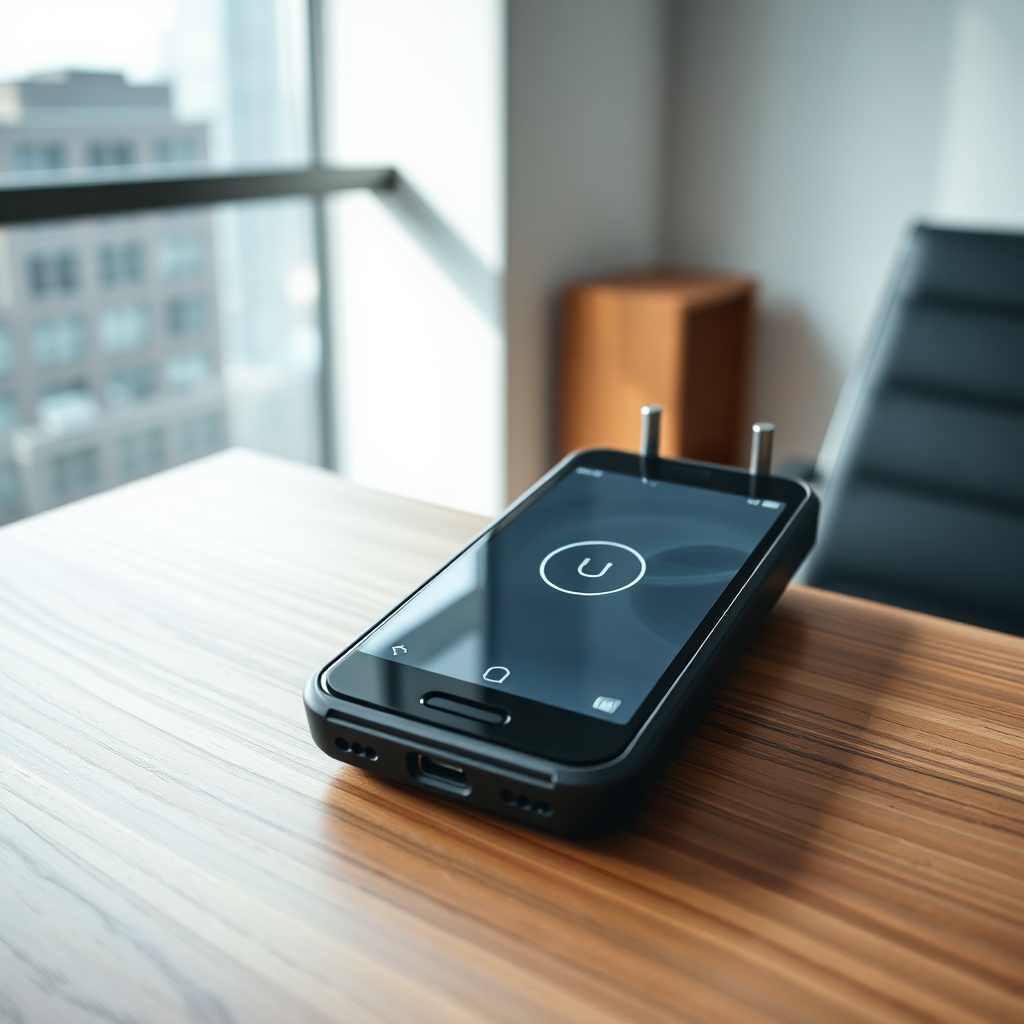
A product-style image highlighting the smartphone appearance and hidden stun prongs of a cell phone stun gun.
A cell phone stun gun combines a working power bank with a concealed electric weapon, and its effectiveness depends entirely on understanding the electrical specs behind the marketing numbers.
How the Disguise Works: Form Factor and Detection
The outer shell is engineered to replicate the dimensions and weight distribution of a real smartphone. Most units measure 5.5–6.3 inches tall, 2.8–3.1 inches wide, and 0.6–0.8 inches thick, weighing between 6 and 10 ounces. The dummy screen is a non-functional glass or acrylic panel, and manufacturers add cosmetic details like a speaker grille, camera lens, and volume buttons to complete the illusion. The stun prongs are concealed at the top edge, along one side, or behind a sliding panel that mimics a SIM card tray.
Definition: Less-lethal weapon — a device designed to incapacitate without causing permanent injury or death, though fatalities are possible under specific medical conditions.
Materials matter for realism. ABS plastic shells are lighter and cheaper but feel hollow in the hand. Aluminum alloy housings, found in premium models like the Vipertek VTS-989 and the ZAP PhoneMate, replicate the cold, solid feel of a genuine smartphone and survive drops better. However, the disguise only works for visual concealment — airport metal detectors and X-ray machines will flag the internal circuitry and lithium battery instantly.

A scenario image showing a person using a cell phone stun gun as a concealed self-defense device during a nighttime commute.
Electrical Specifications: Voltage, Amperage, and Safety
The marketing specs scream “voltage,” but the number that actually matters is amperage. Consumer models deliver 50,000–150,000 volts at 3–4 milliamps. That amperage range causes neuromuscular incapacitation — involuntary muscle contraction, loss of motor control, and intense pain — without the current being high enough to stop the heart. A capacitor discharge cycle delivers repeated pulses (typically 18–25 pulses per second) rather than continuous current, which is why the sensation is a rapid jolt rather than a sustained shock.
Definition: Capacitor discharge — the rapid release of stored electrical energy in short, high-voltage pulses, which is how stun guns deliver their incapacitating effect without continuous current flow.
Safety mechanisms include internal circuit breakers that prevent continuous discharge, insulated handles that protect the user’s hand, and safety switches that must be deliberately disengaged before the device can fire. Accidental self-stun is rare — most documented cases involve users who ignored the safety switch or carried the device loose in a pocket with the prongs exposed.
Real-World Performance: What 50,000–150,000 Volts Actually Does
When the prongs make skin contact, the effects are immediate: sharp pain, muscle spasm, and disorientation that typically lasts 5–15 seconds after contact ends. The attacker loses voluntary motor control in the affected muscle groups, creating a window for you to escape. But a stun gun is not a Taser — a Taser fires two dart projectiles at a range of 15–25 feet, while a stun gun requires direct skin contact at zero to one inch of range.
Quick Answer: A cell phone stun gun delivers a painful, disorienting electric shock on direct skin contact, causing muscle spasm and loss of motor control for 5–15 seconds. It is not a projectile weapon like a Taser — you must be within arm’s reach to use it, and thick clothing significantly reduces its effectiveness.
Common failure modes include thick winter coats that block the prongs, wet skin that dissipates the charge across the surface instead of penetrating, and an attacker’s adrenaline response — a person in a fight-or-flight state can sometimes continue fighting through the pain.
Legal Landscape: Where You Can and Cannot Carry a Cell Phone Stun Gun
The legal status of stun guns varies dramatically by jurisdiction, and disguised weapons face extra scrutiny in several states.
State-by-State Legal Status (2026 Update)
As of 2026, approximately 42 states allow civilian stun gun possession without a permit, including Texas, Florida, and Pennsylvania. Six to eight states impose restrictions. Hawaii requires a permit for any electric weapon. Rhode Island bans disguised weapons specifically — a law that directly targets stun guns in phone form. New York requires a permit and has enforced stricter penalties since the 2022 concealed carry reforms. New Jersey also requires a permit. Most states set the minimum purchase age at 18, though a handful require buyers to be 21. Municipal ordinances add another layer: Chicago, Philadelphia, and Washington D.C. all impose local restrictions that override state allowances.
Air Travel, Schools, and Federal Buildings: Restricted Zones
The TSA explicitly lists stun guns as prohibited items in both carry-on and checked baggage on commercial flights. Attempting to fly with one can result in fines up to $14,950 and potential criminal charges. Federal buildings, courthouses, and military installations are automatic federal offenses under 18 U.S.C. § 930. On college campuses, over 60% of U.S. universities ban stun guns even in states where they are otherwise legal.
Quick Answer: You cannot fly with a stun gun disguised as a phone — the TSA prohibits them in both carry-on and checked baggage, with fines up to $14,950. Federal buildings, courthouses, and most college campuses also ban them outright, regardless of your state’s laws.
Legal Consequences of Misuse: Assault Charges and More
Using a stun gun in a situation that doesn’t meet the legal threshold for self-defense can escalate a charge from simple assault to aggravated assault with a weapon — a felony in most states. Merely displaying the device can be charged as menacing or brandishing in several states. Civil liability is a real risk too: a 2023 Florida civil case awarded $75,000 in damages after a man used a stun gun in a parking dispute that a jury determined wasn’t self-defense.
How to Choose the Right Cell Phone Stun Gun: Features That Actually Matter
Not all disguised stun devices are created equal — the difference between a $30 knockoff and a $150 premium unit is substantial.
Battery Capacity and Charging: Dual-Use as a Power Bank
Battery capacity is the single most important spec. The functional sweet spot is 3,000–5,000 mAh. Below 3,000 mAh, the stun function may not deliver full voltage. Most units hold a full stun charge for 60–90 days in standby, but below 20% battery, the stun output drops by an estimated 30–40%. USB-C is now the standard charging port on 2026 models, replacing the older micro-USB. A 3,000 mAh unit charges a typical phone to about 70% once, which makes the power bank function genuinely useful for daily carry.
Safety Features: Wrist Straps, Safety Switches, and Holsters
A dropped stun gun during a struggle is the #1 cause of disarmament — the attacker grabs it and turns it on you. A wrist strap is non-negotiable. Look for sliding safety switches or push-button disables; fingerprint-activated models exist but add $40–$60 to the price. Holster options include belt clips, pocket holsters, and purses with dedicated compartments for disguised devices.
Price vs. Quality: What $30 vs. $150 Gets You
| Tier | Price | Battery | Build | Warranty | |—|—|—|—|—| | Budget | $30–$60 | 3,000 mAh | ABS plastic, single stun mode | 6–12 months | | Mid-tier | $60–$100 | 4,000 mAh | Dual stun modes, LED flashlight | 1 year | | Premium | $100–$150 | 5,000 mAh | Aluminum housing, safety lock | 2 years |
Red flags to avoid: no UL or CE certification, zero customer reviews, and claims of “10,000,000 volts” — that’s physically impossible for a consumer device. Legitimate manufacturers include Vipertek, ZAP, and Guard Dog Security.
Quick Answer: When buying a stun gun disguised as a phone, prioritize battery capacity (3,000–5,000 mAh), a wrist strap, and a reliable safety switch. Budget models cost $30–$60 but cut corners on build quality and warranty; premium models at $100–$150 offer aluminum housings, dual stun modes, and 2-year warranties. Avoid any device claiming absurd voltage numbers or lacking UL/CE certification.
Effectiveness vs. Alternatives: Is a Disguised Stun Gun Worth It?
The honest answer: it depends on your threat profile, your state’s laws, and your willingness to train with the device.
Comparison Table: Disguised Stun Gun vs. Traditional Stun Gun vs. Pepper Spray
| Feature | Cell Phone Stun Gun | Traditional Stun Gun | Pepper Spray | |—|—|—|—| | Average Price | $30–$150 | $20–$80 | $10–$25 | | Effective Range | Contact only (0–1 inch) | Contact only (0–1 inch) | 8–12 feet | | Reusability | Rechargeable, 60–90 day charge hold | Rechargeable, 60–90 day charge hold | Single-use (15–25 sprays) | | Disguise Value | High (looks like a phone) | Low (obviously a weapon) | Low–Medium (small canister) | | Effectiveness Through Clothing | Low (requires skin contact) | Low (requires skin contact) | High (works on skin and clothing) | | Legal Restrictions | Higher scrutiny (disguised weapon laws) | Moderate | Lower (legal in all 50 states with some restrictions) | | Risk of Accidental Discharge | Low with safety switch | Low with safety switch | Low |
Stop Rate and Real-World Statistics
A 2024 analysis of 1,200 reported self-defense incidents found stun guns stopped an attack 74% of the time when used with proper technique. Pepper spray has a higher stop rate — 85–90% — because it works at a distance and affects the eyes and respiratory system even through light clothing. The trade-off is time-to-effect: stun guns cause immediate pain and muscle spasm in 0.5–1 second, while pepper spray takes 2–4 seconds to fully incapacitate.
Limitations: When a Stun Gun Won’t Help
A stun gun can only target one person at a time — there’s no area effect against multiple attackers. Studies show individuals under the influence of stimulants like methamphetamine can continue fighting through stun exposure. The contact requirement is the biggest vulnerability: a 2025 FBI use-of-force report found that victims attempting to deploy contact-only weapons against armed attackers were injured in 68% of cases.
Quick Answer: A stun gun stops an attack 74% of the time in reported incidents, but pepper spray has a higher stop rate (85–90%) because it works at a distance. Stun guns require skin contact, fail against thick clothing, and are dangerous to deploy against armed or drug-affected attackers. They’re a last-resort tool, not a primary defense strategy.
Step-by-Step: How to Use a Stun Gun in Phone Form Safely and Effectively
Proper technique separates a successful defense from a failed one. Here’s the full deployment sequence.
Pre-Deployment: Carry Position and Grip
Carry the device on your dominant side — pocket, waistband holster, or handbag outer pocket. Never bury it at the bottom of a bag. Grip it with your thumb on the safety switch, index finger along the body, and the stun prongs facing forward. Practice your draw 5–10 times per week; consistent practice reduces draw time from an average of 3.5 seconds to under 2 seconds.
The 5-Step Deployment Sequence
- Assess — Confirm the threat is within arm’s reach and no escape route exists. Deploy only when retreat is impossible.
- Disengage — Slide the safety switch off with your thumb while keeping the device pointed away from your body.
- Aim — Target the upper chest, neck, or inner thigh where clothing is thinnest. Avoid the head and groin.
- Contact and Discharge — Press the prongs firmly against the attacker’s body and hold the trigger for 2–3 seconds, then break contact.
- Retreat — Move away immediately while the attacker is incapacitated (5–15 second window). Call 911 and keep the device visible to responding officers.
Aftermath: What to Do Post-Deployment
Report the incident to law enforcement immediately — failure to do so can result in the attacker filing a counter-complaint. Don’t clean the prongs or alter the device before police inspect it. Seek medical attention if you were injured during the struggle, and request a police report for insurance or legal purposes.
Quick Answer: To deploy a stun gun in phone form effectively: assess the threat, disengage the safety, aim for thin-clothing areas (upper chest, neck, inner thigh), press the prongs firmly and hold for 2–3 seconds, then retreat immediately. Practice your draw 5–10 times weekly to get under the 2-second deployment threshold.
Frequently Asked Questions
Is a stun gun disguised as a phone legal to carry?
It depends on your state. As of 2026, approximately 42 states allow possession without a permit, but 6–8 states impose restrictions, and some cities have additional bans. Check your state’s attorney general website before purchasing.
Can you take one of these devices on a plane?
No. The TSA prohibits stun guns in both carry-on and checked baggage. Attempting to fly with one can result in fines up to $14,950 and potential criminal charges.
Does a disguised stun gun actually stop an attacker?
In 74% of reported self-defense incidents, stun guns successfully stopped an attack. However, they require direct skin contact, and effectiveness drops against heavily clothed or drug-affected attackers.
How many volts does a stun gun in phone form have?
Most consumer models deliver 50,000–150,000 volts at 3–4 milliamps. Higher claimed voltages — like “10,000,000 volts” — are marketing exaggeration and not physically possible in a consumer device.
Will a stun gun kill someone?
Stun guns are classified as less-lethal weapons. Fatalities are extremely rare — fewer than 50 documented cases worldwide since 2000 — and most involve pre-existing heart conditions or drug interactions. However, they are not risk-free.
Conclusion
Choosing a cell phone stun gun starts with legality, then moves to practical effectiveness, then to feature selection. Verify your state’s laws first — a device that gets you arrested isn’t a defense tool, it’s a liability. The critical limitation to accept: this is a last-resort, contact-range tool, not a substitute for situational awareness or escape planning. Buy only from reputable manufacturers with UL or CE certification, and practice your draw technique regularly so deployment becomes muscle memory. The best self-defense device is the one you can legally carry, reliably deploy, and realistically use under stress. For many people, a cell phone stun gun fits that profile — but only with proper preparation and honest expectations. Research your state’s specific statutes today, and if the law allows it, invest in a certified model and start training this week.

