

Pepper Spray vs Stun Gun: The Complete Self-Defense Comparison (2026 Guide)
The choice between pepper spray vs stun gun comes down to one decisive factor: distance. With 1.6 million violent crimes reported in the US in 2024, everyday civilians need a self-defense tool that works under real-world stress — not just in a controlled training environment. Pepper spray projects an inflammatory agent across 8-12 feet of space, while a stun gun requires you to be within arm’s reach of a threatening attacker. That single difference determines effectiveness, safety, and legal exposure in nearly every scenario you’ll face. This guide breaks down stopping power, legality, cost, and practical deployment so you can choose the right tool for your specific lifestyle.
Key Takeaways
- Pepper spray creates 8-12 feet of standoff distance; stun guns require direct skin contact through clothing
- FBI data indicates OC spray stops attackers in roughly 85% of cases, while stun guns succeed only 50-60% of the time through heavy clothing
- Pepper spray is legal in all 50 states; stun guns face bans or felony-level restrictions in Hawaii, Rhode Island, and parts of New York, Maryland, and Massachusetts
- Stun guns carry zero cross-contamination risk, making them superior in cars, elevators, and narrow hallways
- Both tools demand monthly practice and a clear understanding of your local self-defense laws
The Complete Answer: Which One Should You Choose?
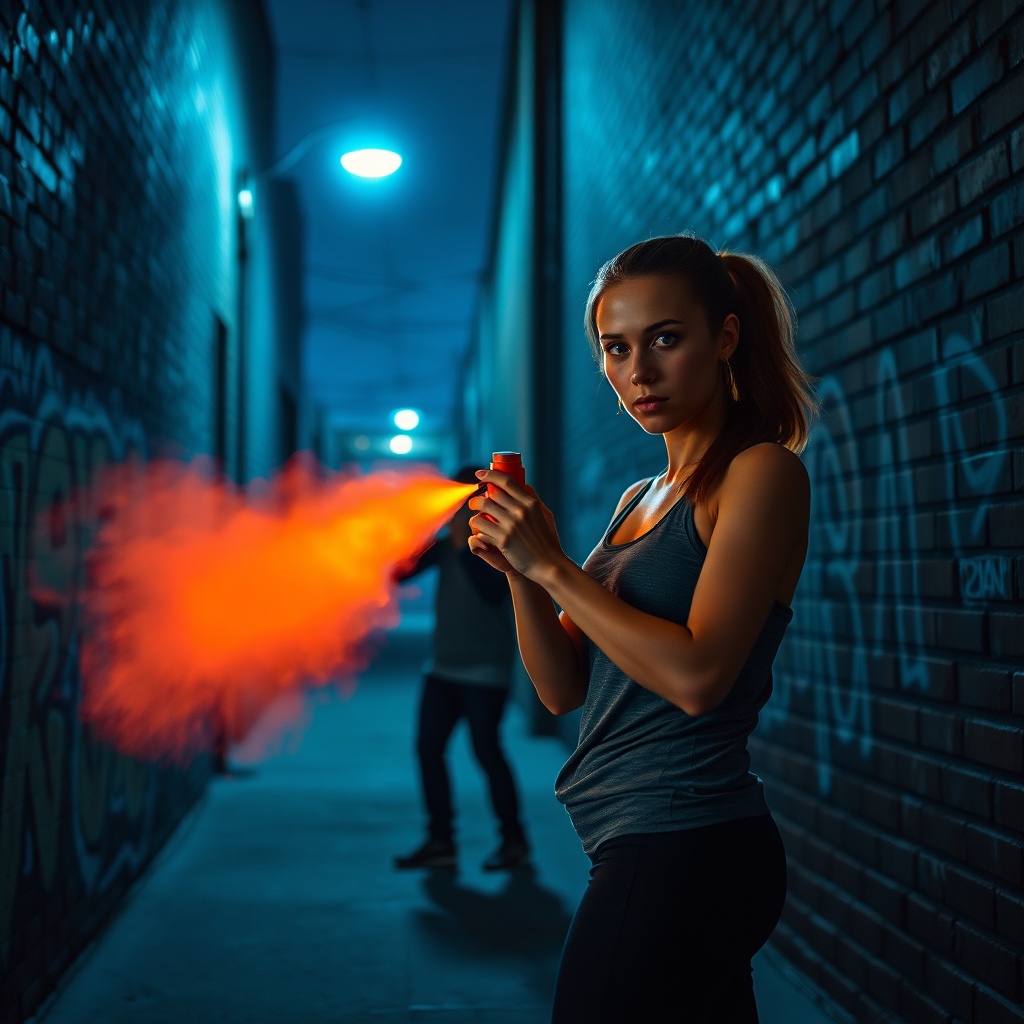
Shows pepper spray creating 8-12 feet of standoff distance in a realistic self-defense scenario.
Pepper spray is the superior choice for approximately 80% of civilians because it creates distance without requiring physical contact. A stun gun only wins for users living in restricted spray jurisdictions or those who routinely operate in enclosed spaces where blowback is a genuine hazard. The distance equation is unforgiving: pepper spray’s effective range of 8-12 feet gives you a reaction window measured in seconds, while a stun gun’s 0-3 inches of contact range puts you inside the attacker’s grappling envelope.
Quick Answer: Choose pepper spray for its 8-12 foot standoff distance and 85% success rate. Choose a stun gun only if you live in a restricted area, work in enclosed spaces, or need a contact weapon with zero blowback risk. Most civilians are better served by OC spray.
The reliability factor seals the decision. OC spray (oleoresin capsicum) affects roughly 90% of people within 2 seconds of contact with the eyes or respiratory system. A stun gun’s effectiveness drops significantly when the attacker is under the influence of drugs, experiencing an adrenaline surge, or wearing thick clothing that insulates the current.
The Distance Advantage Explained
Ten feet of separation changes the entire threat calculus. An attacker lunging from 6 feet away gives you roughly 0.8 seconds to react — enough time to raise a spray canister and fire, but nowhere near enough to close the gap and make contact with a stun gun. In this scenario, pepper spray wins decisively; the stun gun user is already in grappling range before the weapon even leaves the holster.
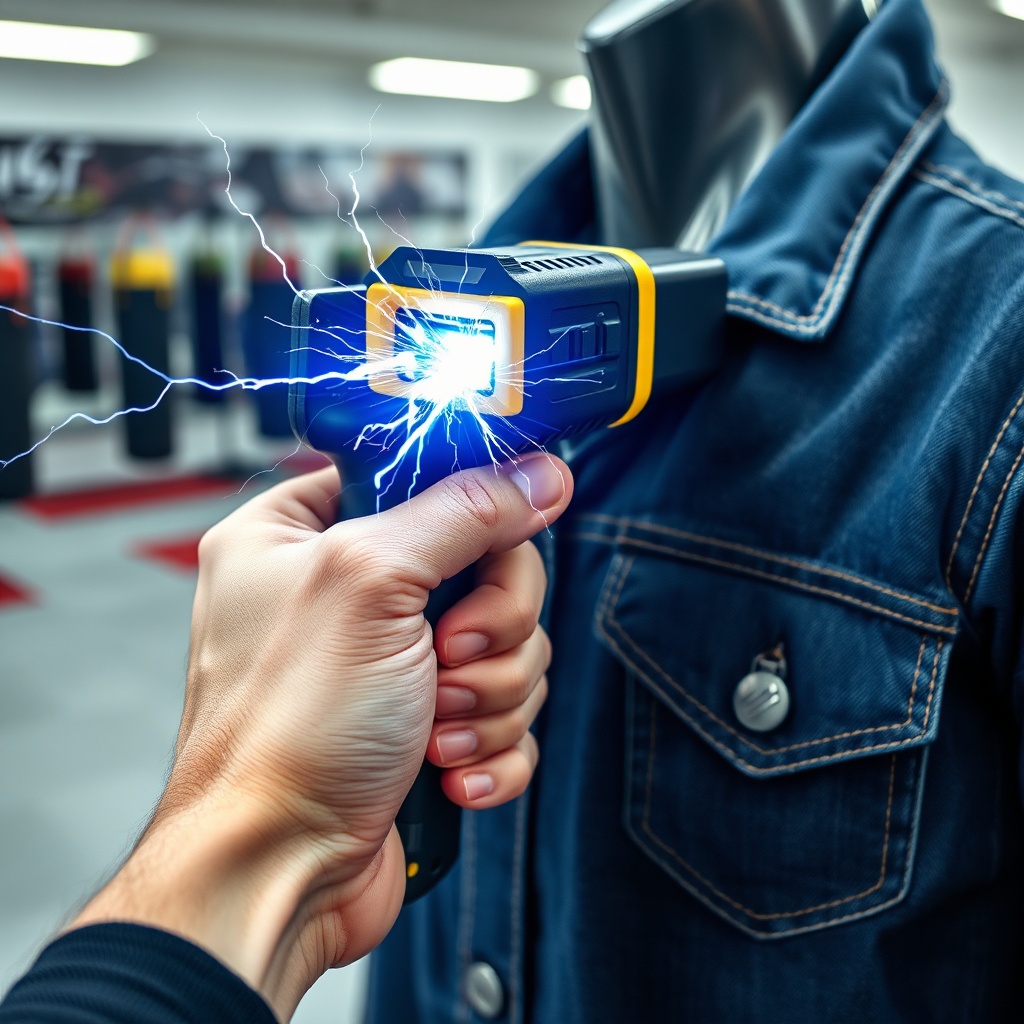
Illustrates that stun guns require direct contact and may be less effective through heavy clothing.
The Clothing and Substance Factor
Stun guns fail against puffy coats, leather jackets, and heavy denim. A 2023 study by the National Institute of Justice found that 38% of stun gun deployments had reduced effectiveness due to clothing interference. Pepper spray bypasses this entirely because it targets the eyes and respiratory tract — no skin contact required.
Definition: OC spray (oleoresin capsicum) — A non-lethal inflammatory agent derived from hot peppers that causes immediate eye closure, bronchial constriction, and intense pain upon contact with mucous membranes.
Effectiveness Showdown: Stopping Power and Real-World Data
Stopping power breaks down into three measurable metrics: incapacitation time, success rate, and repeat deployment capability. FBI Uniform Crime Reporting data shows that 72% of assaults begin with the attacker already within arm’s reach, which favors pepper spray’s reaction-time advantage — you can fire from a defensive posture without closing distance.
A documented 2021 Portland transit attack illustrates the difference: a rider deployed pepper spray against a knife-wielding assailant from 8 feet away, ending the confrontation in 4 seconds. Comparable stun gun scenarios frequently fail because the user cannot achieve contact before being struck.
Incapacitation Time Comparison
Pepper spray takes 2-5 seconds to fully incapacitate an attacker, with effects lasting 30-45 minutes. A stun gun produces immediate neuromuscular disruption, but only while the current flows — the attacker typically recovers within 3-5 seconds after you release the trigger.
Success Rate Statistics
| Factor | Pepper Spray | Stun Gun | |—|—|—| | Effective range | 8-12 feet | Contact only (0-3 inches) | | Success rate (trained user) | 85-90% | 50-60% | | Time to incapacitation | 2-5 seconds | 1-3 seconds (while held) | | Works through thick clothing | Yes | No | | Multiple attackers | Yes (spray stream) | No (single target) | | Cross-contamination risk | High (wind, enclosed spaces) | None | | Average cost per unit | $10-$25 | $30-$80 |
Legal Landscape: What You Can Actually Carry in 2026
Legality overrides every other consideration — the best self-defense tool is worthless if carrying it is a crime. Pepper spray is legal in all 50 states, though Massachusetts, California, New York, and Wisconsin restrict canister size or require purchase from licensed dealers. Stun guns face far harsher restrictions: they are banned outright in Hawaii and Rhode Island, with felony-level penalties for possession in parts of Maryland and New Jersey.
Quick Answer: Pepper spray is legal nationwide with minor restrictions in four states. Stun guns are banned in Hawaii and Rhode Island, restricted in New York City, Massachusetts, and parts of Maryland and New Jersey — where possession can result in up to 5 years in prison.
Where Stun Guns Are Restricted
New York City imposes up to 1 year in jail for stun gun possession. Hawaii treats it as a felony carrying up to 5 years. The 2025 Supreme Court precedent from NYSRPA v. Bruen has prompted 14 states to relax stun gun laws, but enforcement remains inconsistent — urban residents face substantially higher legal risk than rural users.
Air Travel and Workplace Rules
TSA regulations allow pepper spray in checked baggage up to 4 ounces, but stun guns are prohibited entirely on aircraft. Workplace policies also differ: most employers permit spray on premises, while stun guns are frequently classified as weapons and banned outright.
Practical Deployment: Training, Carry, and Misfire Scenarios
Mechanical failure and user error cause more self-defense failures than the weapons themselves. Follow this deployment sequence for pepper spray:
- Draw the canister with your dominant hand while creating distance with your off-hand
- Shake the canister once to ensure the propellant is mixed
- Extend your arm fully and aim for the eyes and nose — not the chest
- Spray in a 2-3 second burst, using a sweeping motion across the attacker’s face
- Move laterally and create distance while the attacker is incapacitated
- Call 911 immediately and keep the canister ready for a second deployment
Stun gun failure modes are equally critical. Approximately 30% of units fail after 12 months without charging. The safety switch frequently disengages under stress, and the “dry fire” problem — pressing the trigger before making contact — wastes your only advantage.
Quick Answer: Pepper spray fails in roughly 20% of deployments due to wind or user cross-contamination. Stun guns excel in cars, elevators, and hallways because they produce zero blowback — but they require monthly charging and practice with the safety switch to avoid failure under stress.
The Wind and Enclosed Space Problem
Wind accounts for most pepper spray failures — a 15 mph gust can blow the stream back into your face. Stun guns have no such limitation, which is why security personnel working in parking garages and transit stations often prefer them.
Carry and Accessibility
Keychain carry gives you an average draw time of 1.8 seconds for pepper spray versus 3.2 seconds for a stun gun buried in a purse. The difference matters: most attacks last under 10 seconds, and every fraction of a second counts.
Cost, Maintenance, and Lifespan
The true cost of ownership extends far beyond the purchase price. Pepper spray costs $10-$25 initially but expires in 2-4 years — check the printed date on the canister. Stun guns cost $30-$80 with rechargeable lithium batteries lasting 3-5 years, but they require monthly charging to maintain peak voltage.
Real Cost Comparison Over 5 Years
| Item | Pepper Spray | Stun Gun | |—|—|—| | Initial purchase | $15 | $50 | | Replacement/refills | $30 (2 refills) | $0 | | Practice materials | $16 (2 practice units) | $0 | | Maintenance | $0 | $0 (monthly charging) | | 5-year total | $61 | $50 |
Expiration and Reliability Checks
OC spray canisters display a printed expiration date — typically 2-4 years from manufacture. Replace immediately if expired. For stun guns, test the voltage monthly with the built-in spark test and recharge whenever the indicator drops below 80%.
Making the Final Decision: A Practical Framework
Use this decision framework based on your specific lifestyle, not generic advice:
- Are you in a restricted stun gun area? → Choose pepper spray
- Do you regularly move through enclosed spaces (parking garages, elevators)? → Consider stun gun
- Are you concerned about wind or cross-contamination? → Consider stun gun
- Do you want maximum standoff distance? → Choose pepper spray
- Can you commit to monthly battery checks? → Stun gun viable; otherwise choose spray
The hybrid approach works best for many: carry pepper spray for distance and a stun gun as a backup for contact scenarios.
The Carrier Profile That Fits Each Device
Choose pepper spray if you are a commuter, jogger, student, or anyone navigating urban environments where distance is your greatest asset. Choose a stun gun if you work security, cover night shifts, or live in a jurisdiction where spray canisters are restricted.
Training Resources and Next Steps
Commit to 30 minutes of monthly practice with your chosen device. Practice drawing, aiming, and deploying against a target. Certified self-defense classes covering both tools are available through organizations like the National Self-Defense Institute and local police department community programs.
FAQ: Pepper Spray vs Stun Gun
Is pepper spray or a stun gun better for self-defense?
Pepper spray is better for most civilians because it works at a distance, succeeds in 85% of deployments, and carries fewer legal restrictions. Stun guns only make sense for users in restricted areas or enclosed-space environments where spray blowback is a concern.
Can pepper spray kill someone or cause permanent damage?
No. OC spray is non-lethal and causes temporary blindness, pain, and respiratory distress lasting 30-45 minutes. Permanent damage is extremely rare and typically requires prolonged exposure or a pre-existing respiratory condition.
How long does pepper spray stay on clothing and surfaces?
The active capsaicin compounds remain on fabric and surfaces for weeks or even months. Wash contaminated clothing separately in hot water and use a degreaser on hard surfaces to neutralize the residue.
Do stun guns work on people under the influence of drugs or alcohol?
Unreliably. Stimulants like methamphetamine and cocaine can override the neuromuscular disruption, and alcohol dulls pain response. The National Institute of Justice reports success rates below 40% against intoxicated subjects.
What is the legal age to carry pepper spray or a stun gun?
Most states set the minimum age at 18 for both devices. California and a handful of other states allow 16-year-olds to carry pepper spray with parental permission. Stun gun age restrictions vary more widely — check your local statutes.
Conclusion
The pepper spray vs stun gun decision ultimately rests on three factors: distance, legality, and maintenance commitment. Pepper spray wins for the majority of civilians because it creates a 10-foot safety buffer, works through any clothing, and carries minimal legal risk. Stun guns serve a narrow but legitimate role for users in restricted areas or enclosed environments. Whatever you choose, ownership without training is false security — a weapon you cannot deploy under stress is just extra weight. Check your state laws today, then purchase a practice unit before your live unit. Your safety depends on preparation, not possession.

