

Hidden Protection: Safety Devices Disguised as Everyday Items are tools, garments, and accessories designed to hide a firearm or defensive tool on your body while keeping it accessible for everyday self-defense. Whether you carry a licensed concealed handgun, pepper spray, or a knife, understanding Stun Guns vs. Pepper Spray: Choosing the Right Self-Defense Tool helps set the stage, but the goal is the same: maintain a low visual profile so no one knows you are armed. Discretion matters for several reasons. It keeps you compliant with local laws, avoids drawing unwanted attention in social settings, and preserves the tactical advantage of surprise if you ever need to defend yourself. This Comprehensive Guide covers the main categories of discreet carry items, how to choose the right one, and the common mistakes to avoid.
Quick Answer: Discreet carry items are any product — holsters, bags, clothing, or accessories — that lets you carry a defensive tool without it being visible to others while keeping it quickly accessible.
Key Takeaways
- Discreet carry items are tools and garments designed to hide a firearm or defensive tool while maintaining quick access.
- The best discreet carry setup balances concealment, comfort, retention, and accessibility — not just one factor.
- The most common categories are holsters, bags, clothing, and accessories; each serves a different carry style.
- Choosing the right item depends on your body type, clothing, firearm size, and local legal restrictions.
- Practice and testing are essential — a discreet carry item only works if you can draw from it safely and consistently.
The Complete Answer: What Are Discreet Carry Items?
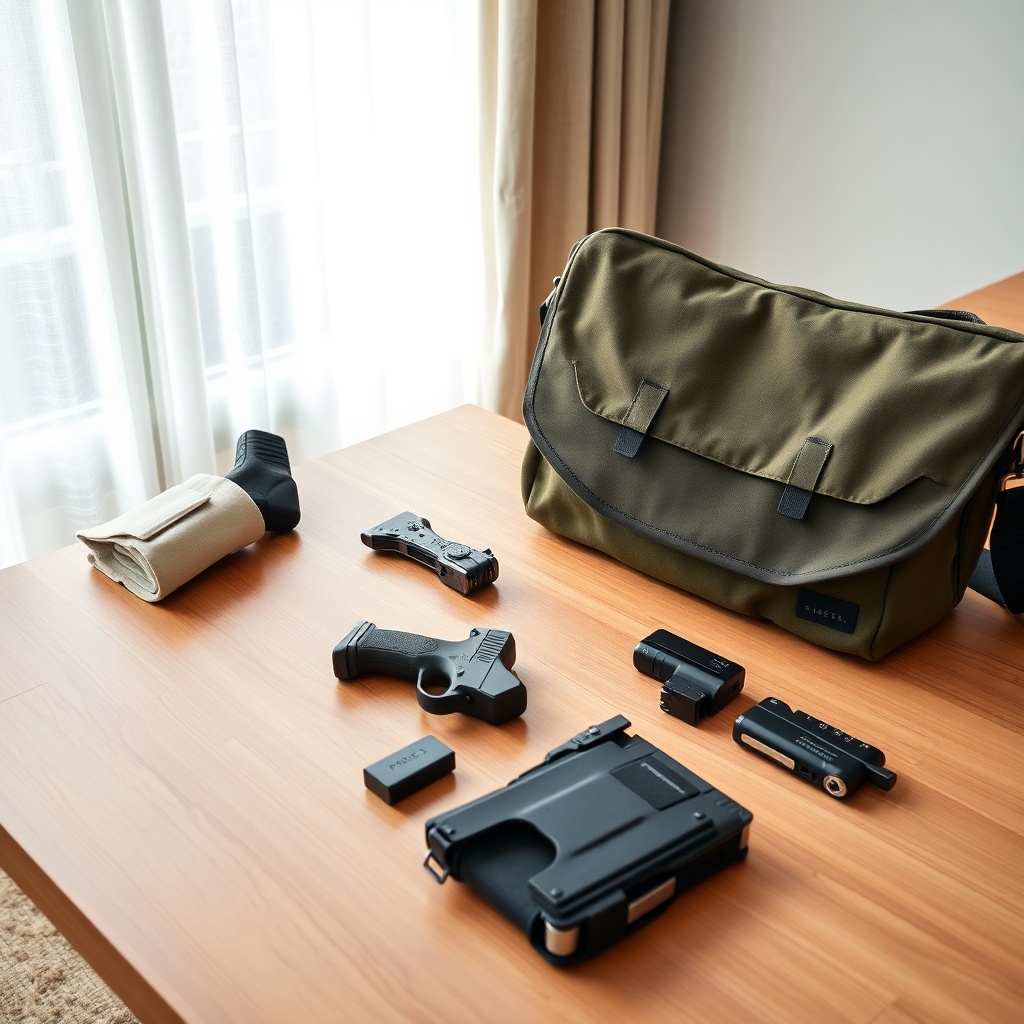
Lifestyle product shot showcasing a variety of hidden defense accessories integrated into daily routines, highlighting practical design and seamless concealment.
Definition and Core Purpose
Discreet carry items are any product that enables you to carry a weapon — a firearm, pepper spray, knife, or similar defensive tool — without it being visible to others. They include holsters, carry bags, concealment clothing, and accessories like reinforced belts or magnetic mounts. The core purpose is to maintain a low visual profile while keeping the item accessible for defense. A good discreet carry item should disappear under your clothing but still allow you to reach your weapon quickly when needed.
Definition: Printing is when the outline or bulge of a concealed weapon becomes visible through clothing, making it apparent that you are carrying.
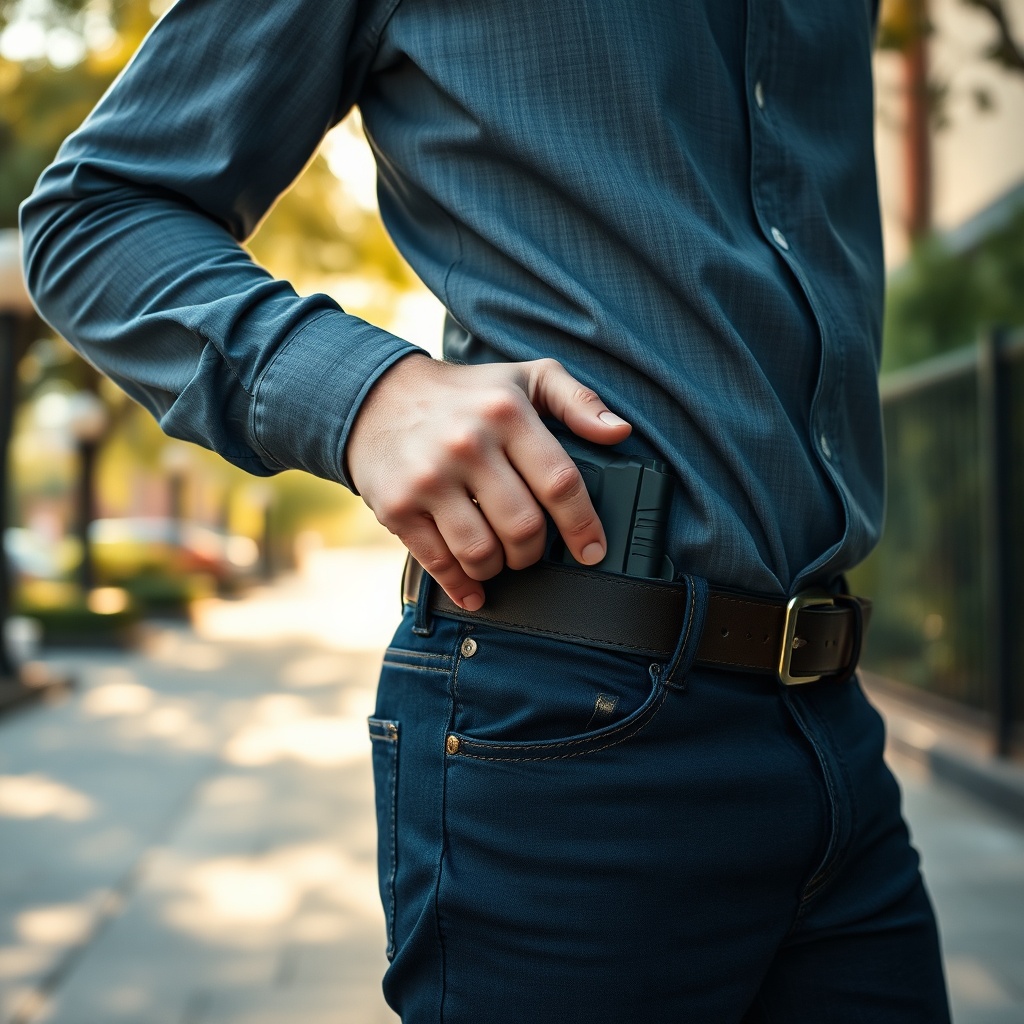
Action-oriented image illustrating proper handling and quick access from concealed carry gear, reinforcing safety, training, and reliable everyday protection.
Who Uses Discreet Carry Items
Licensed concealed carry permit holders make up the largest group, but they are far from the only users. Security professionals and off-duty law enforcement officers often need to carry while in plain clothes. Individuals who carry Exploring Cheetah Cell Phones and Stun Guns: A Modern Safeguard products also rely on discreet carry items. Beyond self-defense, some people use discreet bags and pouches to carry valuables or medical devices without drawing attention to them.
Legal and Regulatory Context
Laws governing concealed carry vary significantly by jurisdiction. What is legal in one state or country may be restricted in another. Some items may be prohibited in certain locations such as schools, government buildings, or private property where signs are posted. Always verify The legality and availability of personal security tools in the US online before purchasing or carrying any discreet carry item. A carry method that is perfectly legal at home could put you in trouble across a state line or in a restricted building.
Why Discreet Carry Matters: The Core Principles
The Concealment-Accessibility Tradeoff
More concealment often means slower or less comfortable access. A deep-concealment holster that hides a firearm under tight clothing may require a more deliberate draw stroke than a standard waistband holster. The ideal setup minimizes this tradeoff through thoughtful design and positioning. You have to decide what matters more in your daily life: maximum concealment or maximum speed.
Printing and Visual Detection
Printing occurs when the outline of the weapon is visible through clothing. Clothing choice, body posture, and carry position all affect printing. A firearm carried at the appendix position may print when you sit down, while a strong-side holster might print when you bend over. Wearing darker, thicker fabrics or patterns can help break up the outline. Checking yourself in a mirror from multiple angles is the simplest way to spot printing.
Retention and Security
Retention refers to how securely the item holds the weapon. Passive retention relies on friction and straps to keep the firearm in place. Active retention uses locking mechanisms, such as thumb breaks or trigger-guard locks, that you must release before drawing. Passive retention is faster but less secure; active retention is safer in a struggle but slower to access. The right choice depends on your environment and threat level.
Comfort and All-Day Wearability
Discreet carry items must be wearable for hours without pain or awkward movement. Body type, seasonal clothing, and daily activities determine what works. A holster that feels fine for an hour may become uncomfortable after a full workday. Ankle holsters can cause chafing, while appendix carry may press against your body when seated. The best discreet carry setup is one you will actually wear consistently, not one that sits in a drawer.
Types of Discreet Carry Items (With Comparison Table)
Inside-the-Waistband (IWB) Holsters
IWB holsters are the most common choice for concealed carry. They fit between your body and your pants, with only the top of the holster visible. Subcategories include appendix carry (AIWB), strong-side carry, and cross-draw carry. Appendix carry places the firearm in front of your body, making it easy to reach when seated or driving. Cross-draw carry positions the weapon on the opposite side of your dominant hand, which offers a different set of advantages for certain clothing styles.
Quick Answer: The most discreet carry method depends on your body type, clothing, and firearm size. Pocket carry and deep-concealment holsters such as ankle or appendix rigs are often the most discreet, but they trade off accessibility.
Outside-the-Waistband (OWB) Holsters
OWB holsters attach to the outside of your pants and are easier to access and more comfortable than IWB options. The tradeoff is concealment. OWB holsters are harder to hide under tight clothing and usually require a jacket or an untucked shirt. They are a strong choice for open carry or for concealed carry under a cover garment.
Pocket and Ankle Holsters
Pocket and ankle holsters provide deep concealment for situations where waistband carry is impractical. Pocket carry works best with small or compact firearms and requires a dedicated pocket that is free of other items. Ankle holsters are useful when you are seated for long periods, such as while driving or working at a desk, but they limit you to smaller firearms and can be slow to access.
Off-Body Carry Bags and Pouches
Sling bags, fanny packs, messenger bags, and dedicated concealment purses allow you to carry a weapon without it being on your body. This is a practical option for women, reviewing the 10 Best Self-Defense Weapons for Runners and Joggers products, or when a waistband holster is not feasible. Off-body carry requires more attention to security because the bag can be set down, grabbed, or lost. Choose a bag with a dedicated, quick-access compartment and keep the weapon separate from other items.
Concealment Clothing and Accessories
Concealment shirts, undershirts, leggings, and holster-integrated jackets are designed specifically to hide a weapon. Deep belly band holsters wrap around your torso and can hold a firearm at multiple positions, making them useful for activewear or for people who cannot use a traditional waistband holster. Specialized gun belts — also called EDC belts — are stiffened to support the weight of a holster and firearm. A regular belt often sags under the weight, causing the holster to shift and the weapon to print. Reinforced belts keep the firearm in a consistent position and improve overall concealment.
Comparison Table: Discreet Carry Item Types
| Type | Concealment Level | Accessibility | Comfort | Best For |
|---|---|---|---|---|
| IWB Holster | High | High (with practice) | Medium | Everyday carry, appendix carry |
| OWB Holster | Medium | Very High | High | Openly concealed under jackets |
| Pocket Holster | Very High | Low | High | Deep concealment, small guns |
| Ankle Holster | Very High | Low | Medium | Backup gun, seated positions |
| Carry Bag | High | Medium | High | Women, off-body carry, travel |
| Concealment Clothing | High | Medium | High | Specialized outfits, activewear |
How to Choose the Right Discreet Carry Item (Step-by-Step)
Step 1: Define Your Carry Scenario
Consider your daily routine: work, commuting, exercise, formal events. Determine which positions are most accessible for your body and clothing. A job that requires sitting at a desk all day may favor appendix carry or an ankle holster. A job with lots of standing and walking may favor strong-side IWB.
Step 2: Match the Item to Your Firearm and Body Type
Smaller firearms are easier to conceal but may be harder to shoot accurately. Body shape affects which positions hide the weapon best. A person with a larger frame may conceal a full-size pistol at the strong side, while a smaller person may need a compact firearm for the same position. Try multiple positions with your actual firearm before committing.
Step 3: Evaluate Retention and Safety Features
Look for adjustable retention and positive locking mechanisms. Test whether the item prevents accidental trigger contact. The trigger guard should be fully covered at all times. A holster that allows the trigger to be touched through the material is a safety risk and should be avoided.
Step 4: Test Concealment with Your Actual Clothing
Wear the item with the clothes you normally use. Check for printing in mirrors from the front, side, and back angles. Sit down, bend over, and reach up to see if the weapon shifts or becomes visible. What looks hidden while standing may print when you sit.
Step 5: Practice Drawing and Reholstering
Practice dry-fire draws from the specific carry position. Reholstering safely is as important as drawing quickly. You must be able to return the firearm to the holster without pointing it at yourself or others. Practice until the movement is smooth and automatic.
Step 6: Consider Legal Restrictions and Workplace Policies
Verify that the carry method is legal in your area and acceptable at your workplace. Some locations may ban certain items or require specific holsters. Your employer may have policies that prohibit weapons on the premises even if state law allows them. Know the rules before you carry.
Hidden in Plain Sight: Advanced Discreet Carry Strategies
Off-Body Carry Done Right
Using a dedicated carry bag with a secure compartment and quick-access opening requires deliberate planning. Keep the bag with you at all times and never leave it unattended. Position the bag so you can reach the weapon with your dominant hand. Practice opening the compartment and drawing without looking down.
Wardrobe Optimization for Deep Concealment
Selecting fabrics, colors, and patterns that minimize printing is a practical skill. Darker colors and busy patterns hide outlines better than light, solid colors. Layering with an untucked shirt or jacket adds another barrier between the weapon and an observer. Strategic layering also lets you adjust concealment as the day goes on.
Situational Awareness and Movement
Adjusting posture and gait to avoid revealing the weapon takes practice. Avoid bending at the waist when you can squat instead. Know when to reposition or adjust the carry item. If you feel the weapon shifting, find a private space to fix it rather than adjusting in public.
Common Mistakes and How to Avoid Them
Choosing Style Over Function
Buying a holster or bag that looks good but fails in retention or access is a common mistake. Prioritize function first, then aesthetics. A stylish bag with a flimsy compartment is worse than a plain bag that works reliably.
Neglecting Retention and Trigger Coverage
Using loose or poorly fitting items that allow the firearm to shift is dangerous. Always ensure the trigger guard is fully covered. A holster that lets the weapon move around increases the risk of an accidental discharge and makes drawing slower.
Overpacking Your Carry Bag
Filling a discreet bag with too many items can make the weapon hard to reach. Keep the weapon compartment separate and unobstructed. If you have to dig past keys, a wallet, and a phone to reach your firearm, the bag is not serving its purpose.
Failing to Practice with Your Actual Setup
A new holster or bag requires dedicated practice. Test draw speed, one-handed access, and reholstering in realistic scenarios. Dry-fire practice at home is the safest way to build muscle memory before you carry in public.
FAQ
Are discreet carry items legal to use?
Legality depends on your jurisdiction and the type of item. Firearms and defensive tools are subject to local laws. Always check your local regulations before purchasing or carrying any discreet carry item.
What is the most discreet carry method?
The most discreet method depends on your body type, clothing, and firearm size. Pocket carry and deep-concealment holsters such as ankle or appendix rigs are often considered the most discreet, but they have tradeoffs in accessibility.
Do I need a special belt for carrying a firearm?
A stiff, reinforced gun belt significantly improves concealment and comfort. It prevents the holster from sagging and keeps the firearm in a consistent position. A regular belt is usually not stiff enough to support the weight of a firearm.
Can I carry in a bag or purse?
Yes, off-body carry in a dedicated bag is a valid option. However, it requires more attention to security and access. Choose a bag with a dedicated, quick-access compartment and practice retrieving your weapon.
How do I know if my carry item is printing?
Stand in front of a mirror and check from multiple angles. Look for any visible outline or bulge under your clothing. Wearing tighter-fitting clothes or changing carry positions can help reduce printing.
Conclusion
Choosing the right discreet carry item is a personal decision that depends on your body, clothing, firearm, and daily routine. There is no single best option — only the best option for you. Concealment, comfort, retention, and accessibility must all be balanced. Test multiple options, practice regularly, and stay informed about local laws. The best discreet carry item is one you can carry consistently and access confidently.

