

Verbal De-escalation Scripts for Night Runner Self Defense
Quick Answer: What is the most important verbal tactic for self defense for night runners? Use a firm, direct command that asserts awareness, such as “You need to stay back. I see you.”
For self defense for night runners, specific phrases are more effective than vague warnings. When someone is following you, say firmly: “You need to stay back. I see you.” This asserts awareness and takes control of the interaction.
When someone approaches from a vehicle, say: “I’m not interested. Stay away.” Do not stop, do not engage, and do not look back.
When someone asks for help, say: “I’ll call for help. Stay there.” This acknowledges the person without inviting conversation or getting close.
Tone and volume matter. Loud, direct, and non-negotiable language signals assertiveness. The “friendly but firm” balance is key: acknowledge the person without inviting conversation. A simple “No thanks” said with a confident voice and continued movement is often enough to disengage.
Post-Incident Protocol
Quick Answer: What should you do immediately after a threat or attack? Move to a safe location, call 911, and document the incident. Reporting is essential even if you escaped unharmed.
What you do after a threat or attack matters as much as what you did during it. First, move to a safe location. Do not stop near the scene. Then call 911 and document the incident: time, location, description of the person, and any details you remember.
Reporting is essential, even if you escaped unharmed. Your report helps identify patterns and protects other runners. It also creates a record that may be useful later.
Psychological recovery is equally important. A scary encounter can have a real emotional impact. Acknowledge that impact, talk to someone you trust, and consider taking a break from night running. There is no shame in adjusting your routine after a frightening experience.
Building a Night Runner’s Safety Protocol
Illustrates the essential pre-jog checklist, highlighting how reviewing safety gear, location sharing, and personal alarms builds confidence before night runs.
Pre-Run Checklist: Building the Habit
Create a simple, repeatable checklist before every night run: Check your phone battery, share your location, confirm your route, charge your lights, review the 10 Best Self-Defense Weapons for Runners and Joggers products, and inform someone of your expected return time.
The “one-rule” habit is the best place to start. Begin with one non-negotiable action—like always sharing your location—and build from there. Once that becomes automatic, add the next item. Consistency beats intensity.
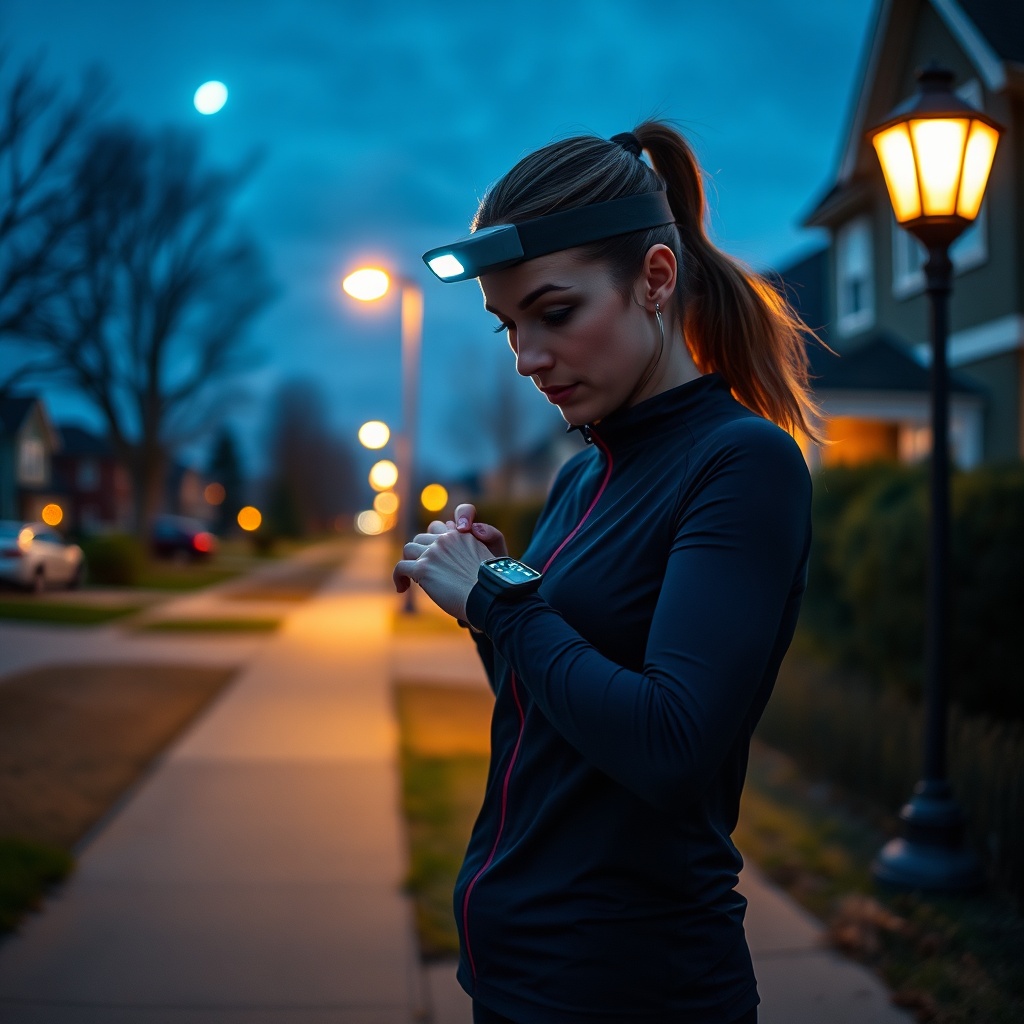
Captures the confident, non-confrontational stance recommended for de-escalating threats while prioritizing continuous movement and situational control after dark.
Partner and Group Running Strategies
The buddy system is one of the most effective deterrents. Running with a partner or group dramatically reduces the likelihood of being targeted. But a group needs structure to be effective.
The “lead and tail” formation is simple: stronger or more experienced runners should position at the front and back. This ensures the most vulnerable runners are protected in the middle.
Designate roles: assign someone to carry the phone, someone to carry the alarm, and someone to scout ahead. When everyone knows their role, the group runs more cohesively and safely.
Communicating Your Route and Check-In Systems
The “check-in” ritual is a fixed time to message someone after your run. If you do not check in, they know to act. This creates a safety net that does not require constant phone monitoring.
Use a “safety word” or code: a simple phrase that signals you are in trouble without drawing attention. This is useful in situations where you cannot speak freely.
Definition: Safety word — a pre-arranged code word or phrase that signals you are in trouble without drawing attention. It is useful when you cannot speak freely and need a discreet way to alert a trusted contact.
The “digital breadcrumb” approach means leaving your route details with a trusted person, including expected start and end times. This gives someone the information they need to find you if something goes wrong.
Quick Answer: What is the most important safety habit for night runners? Always share your live location with a trusted contact before every night run. This single habit creates a safety net that costs nothing and can make all the difference.
FAQ

Is pepper spray legal to carry while running?
Laws vary by country, state, and municipality. Some jurisdictions restrict carry size, concentration, or require a license. Research The legality and availability of personal security tools in the US before carrying pepper spray. If you are unsure, a personal alarm is a universally legal alternative.
What is the most effective self-defense move for a runner?
The most effective move is one that creates distance and allows you to escape—not a prolonged fight. A targeted strike to a vulnerable area followed by immediate flight is the practical approach for a runner. Your goal is to disengage, not to win.
Should night runners carry a weapon?
It depends on your comfort, skill level, and local laws. For most runners, a personal alarm or Stun Guns offers a better balance of safety, legality, and practicality than a weapon. A weapon you are not trained to use is more dangerous than no weapon at all.
How can I make myself more visible to drivers and others while running at night?
Use a layered approach: a headlamp for forward visibility, reflective clothing for 360-degree visibility, and a blinking rear light to signal your presence from a distance. Visibility is not just for cars—it reduces the likelihood of being targeted by anyone.
What should I do if I feel like I’m being followed while running at night?
Trust your instincts immediately. Change direction, cross the street, and move toward a safe zone. Call emergency services if you feel in danger, and do not engage with the person following you. Your safety is more important than being polite.
Conclusion
Definition: Route intelligence is the practice of knowing your running route—including lighting, escape routes, and safe zones—before you head out at night. It is a foundational element of self defense for night runners.
Self defense for night runners is a mindset and a system, not a single trick or tool. It is built on five key action areas: route intelligence, visibility, minimal carry tools, scenario training, mastering Self-Defense Techniques, and a consistent safety protocol. Each layer reinforces the others, creating a comprehensive approach that adapts to the unique constraints of running in the dark.
Start small. Implement one new safety habit this week—share your location, buy a personal alarm, or secure a reliable model in Black. Then build from there. The goal is not to live in fear, but to run with confidence—knowing you have a plan for the unexpected. Your night runs should feel like freedom, not vulnerability. With a solid framework in place, they can be exactly that.

