

Personal safety in 2026 is not about living in fear; it’s about being prepared. For many, that preparation includes a less-lethal option that fits their daily routine, prioritizing Personal Protection. The challenge is that the market for these tools is saturated with marketing claims, confusing specs, and legal gray areas. Finding the best stun guns for self-defense requires cutting through the noise to focus on what actually works: reliability, accessibility, and usability. This guide provides a clear framework to help you choose a stun gun that fits your lifestyle, complies with your local laws, and is effective when you need it most.
Key Takeaways
- Effectiveness is about placement and reliability, not voltage. A stun gun’s true power lies in its ability to create a neuromuscular incapacitation response, which is more dependent on amperage and electrode placement than a high voltage number on a box.
- Form factor is the most critical personal choice. A compact keychain model is vastly different from a full-sized stun baton; the “best” one is the one you will carry every day and can access quickly under stress.
- Legal compliance is non-negotiable. State and local laws vary significantly regarding stun gun ownership, carry restrictions, and wattage limits. Researching The legality and availability of personal security tools in the US is the first step.
- Training is what separates a tool from a liability. Buying a stun gun is only the first step; you must practice drawing, firing, and using it under simulated stress to build muscle memory.
- Features like safety switches and flashlights are not optional. A stun gun that accidentally fires or is hard to locate in the dark is a danger to you, not a defense against a threat.
The Complete Answer: What Are the Best Stun Guns for Self-Defense in 2026?

Illustrates the critical importance of choosing a portable, stress-tested form factor that fits seamlessly into daily routines for consistent personal safety.
Quick Answer: The best stun gun for self-defense is the one you will reliably carry, is legal in your area, and has a form factor you can deploy quickly. Prioritize amperage and build quality over advertised voltage, and match the style (keychain, baton, flashlight) to your primary use case.
Defining the “Best” Stun Gun
To find the best stun guns for self-defense, you must first understand that the marketing often doesn’t match the reality. The most common misconception is that a higher voltage equals a more powerful stun gun. In truth, voltage is primarily a measure of the spark’s ability to jump a gap. For a deeper technical breakdown, review How Do Stun Guns Work? A Complete Beginner’s Guide to Voltage and Amps products. The real stopping power comes from amperage (measured in milliamps), which is the current that actually causes the neuromuscular disruption.
Definition: Stun gun amperage is the measure of electrical current that flows through the body when the device makes contact. It is the primary factor in causing involuntary muscle contractions and is a more reliable indicator of a stun gun’s effectiveness than its voltage rating.
When evaluating any model, you should focus on three core pillars:
- Reliability: Will it work every time you pull the trigger? This depends on build quality, battery health, and the integrity of the internal components.
- Accessibility: Can you get to it quickly under stress? A powerful stun gun buried in a bag is useless.
- Usability: Can you operate it effectively with a firm grip, even with adrenaline pumping? This means a non-slip handle, an intuitive safety switch, and a design that fits your hand.
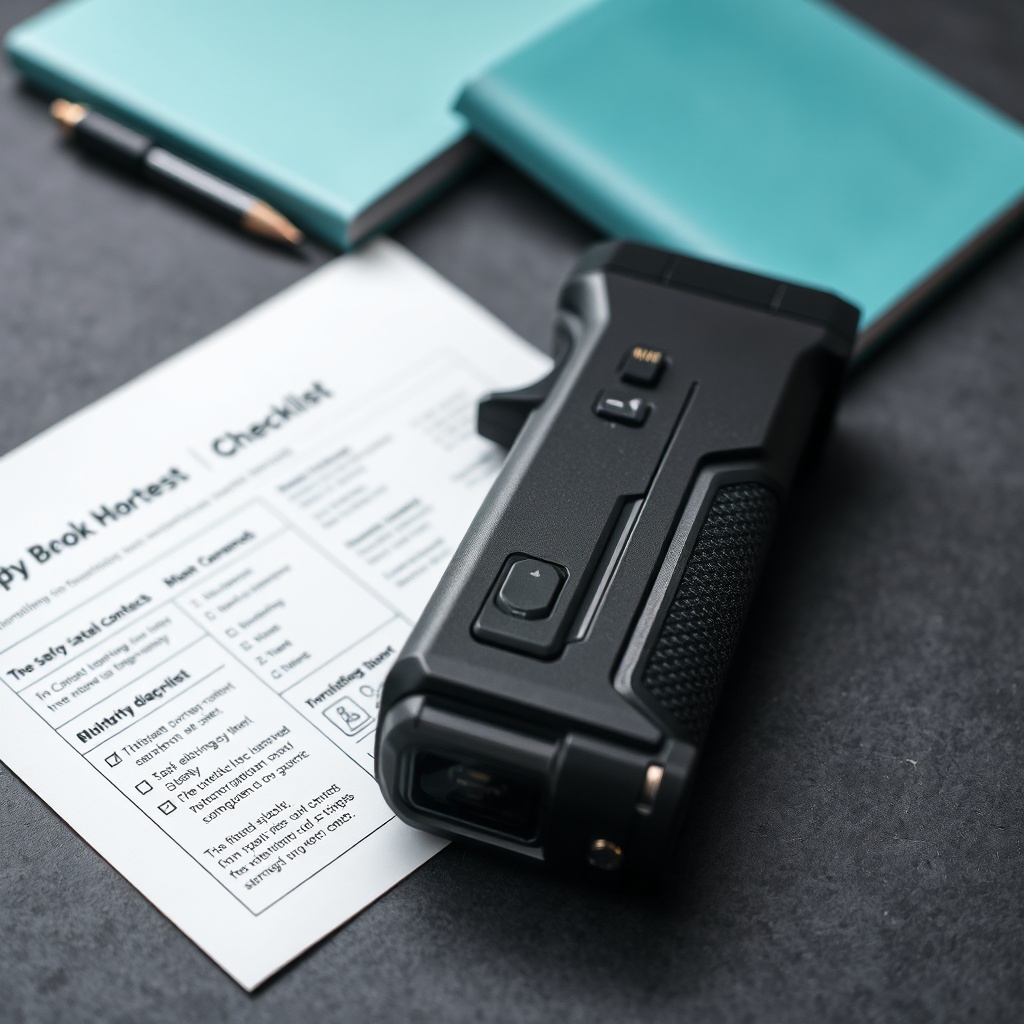
Emphasizes the physical features and build quality that ensure reliable performance and prevent accidental discharge, aligning with the guide’s focus on usability and legal compliance.
The Top 5 Stun Gun Categories for Personal Defense
The best stun guns for self-defense aren’t a single model; they are categories designed for different needs. Understanding the pros and cons of each will help you make the right choice.
Category 1: The Keychain Stun Gun (Best for Everyday Carry)
- Pros: Maximum portability, always available, easy to conceal.
- Cons: Lower stopping power, requires close proximity, small grip can be hard to use.
These are the quintessential keychain sized personal safety devices. They are designed to be attached to your keys or carried in a pocket, making them ideal for daily carry (EDC). The trade-off is their size: a smaller device typically has a smaller battery and less robust internal components, which can result in a less powerful shock and a shorter effective range.
Category 2: The Stun Baton (Best for Home Defense)
- Pros: Extended reach, more intimidating, higher power output, often includes a flashlight.
- Cons: Not easily concealed, heavy, can be unwieldy in close quarters.
A stun baton is a long, cylindrical device that offers significant reach. This is a major advantage for home defense, as it allows you to keep an attacker at a distance. The larger size typically accommodates a more powerful battery and a higher amperage output. The presence of a bright flashlight is a common feature, serving a dual purpose of illumination and disorientation.
Category 3: The Stun Gun Flashlight (Best for Multi-Functionality)
- Pros: Disguised as a regular tool, provides illumination, good for both walking and home use.
- Cons: May be less effective as a stun gun due to design compromises, can be mistaken for a regular flashlight in an emergency.
These devices combine a powerful flashlight with a stun gun, making them a discreet and practical option. They are excellent for dog walkers or anyone who walks at night, as you are already carrying a flashlight. The downside is that the stun functionality is often integrated into the front of the flashlight, meaning you must point the light at the attacker to use it, which can be a less natural motion than deploying a dedicated stun gun.
Category 4: The Stun Gun with a Safety (Best for Beginners)
- Pros: Prevents accidental discharge, ideal for those new to self-defense, peace of mind.
- Cons: Adds a step to the deployment process, requires practice to disable quickly.
A stun gun trigger guard safety feature or a slide safety switch is a critical addition for anyone new to carrying a self-defense tool. It prevents the device from firing if it is jostled in a bag or dropped. Empowering Yourself: The Use of Non-Lethal Self-Defense Techniques online emphasizes that proper handling and drills prevent panic. The downside is that it adds a step to your deployment process. You must practice disengaging the safety so that it becomes a fluid, automatic motion.
Category 5: The High-Output Stun Gun (Best for Maximum Stopping Power)
- Pros: Highest amperage, most reliable for incapacitating a determined attacker, often features a longer-lasting charge.
- Cons: Larger and heavier, may be overkill for most situations, legal restrictions may apply.
These are the most powerful stun guns available, designed to be the most effective less-lethal option. They are often larger and heavier than other models and may have restrictions in some jurisdictions. For most people, a high-output model is more than they need, but for those in high-risk situations or who want maximum assurance, they are the top choice.
How to Choose the Right Stun Gun: A Buyer’s Checklist
Assessing Your Personal Risk Profile and Carry Style
Your choice of stun gun should be a direct reflection of your daily life and potential risks.
- Determine your daily routine: Are you in a city, a suburb, or a rural area? Do you walk alone at night? Your environment dictates your risk profile.
- Match the stun gun to your lifestyle: A keychain model for a minimalist, a baton for a homeowner, a flashlight for a dog walker. Explore Best Stun Guns for Women in 2026: Top Cheetah Models Reviewed online for tailored recommendations based on grip strength and carry preferences.
- The “Always Carry” Test: If it’s too heavy or awkward, you won’t carry it. The best stun gun is the one you have with you. A powerful baton that stays in your nightstand is useless for a threat you encounter on your evening walk.
Key Features to Look For
The Safety Switch: Slide vs. Push-Button
This is a critical design choice. A slide safety is often more intuitive and can be disengaged with a thumb motion. A push-button safety is less common but may be harder to accidentally disengage. The trade-off is always between accidental discharge and speed of deployment. The best safety switch is the one you can operate without looking at it.
The Build Quality and Grip
A textured, non-slip grip is non-negotiable. In a high-stress situation, your hands are likely to be sweaty or shaking. Look for a rubberized coating or a textured pattern that you can hold firmly. The overall build quality should feel solid, not like a cheap plastic toy. Durable weatherproof self-defense gadgets are a wise investment, as you may carry this device in rain or extreme conditions.
The Integrated Flashlight
A flashlight serves two purposes: it can disorient an attacker and it can help you identify a threat in the dark. A bright light shined in an attacker’s eyes can give you a crucial moment to act. This feature is especially important for a stun baton or stun flashlight.
The Charging Method and Battery Life
Rechargeable battery stun guns are the standard today. Look for a model that uses a standard micro-USB or USB-C charger, as this makes it easy to keep your device topped off. The battery should hold a charge for a reasonable amount of time when not in use. A device that is dead when you need it is a liability.
Comparing Top Models: A Feature-by-Feature Breakdown
| Model/Type | Best For | Key Feature | Pros | Cons |
|---|---|---|---|---|
| Keychain Stun Gun | EDC | Compact size | Highly portable, always accessible | Low power, small grip |
| Stun Baton | Home Defense | Extended reach | High power, intimidating, often has a light | Not concealable, heavy |
| Stun Flashlight | Multi-Use | Dual function | Practical, discreet, illuminates | May compromise stun power |
| Stun Gun w/ Safety | Beginners | Safe handling | Prevents accidents, peace of mind | Slower to deploy |
| High-Output | Maximum Power | Raw stopping power | Most effective | Bulky, heavy, potential legal limits |
What this table means for you: The best choice is a function of your primary use case. A keychain model is superior for daily carry, while a baton is superior for home defense. There is no single “best” model; there is only the best model for your specific needs.
The Legal and Ethical Landscape of Stun Gun Ownership
Navigating State and Local Laws
The patchwork of state laws regarding stun gun ownership is complex and varies significantly. Some states allow ownership without a permit, while others require a license or prohibit certain types, such as stun batons or models above a certain wattage. It is also critical to check your city and county ordinances, as they can be more restrictive than state law. There are also restrictions on carrying these devices in specific locations like schools, government buildings, airports, and private property where signs may be posted.
Quick Answer: Stun gun laws are not uniform. You must research your specific state, county, and city regulations before purchasing. Some jurisdictions require a permit, while others ban certain types of stun guns entirely.
The Ethical Use of Force
It is essential to understand that a stun gun is a less-lethal option, not a non-lethal one. It can cause serious injury or death in individuals with certain medical conditions. Empowering Yourself: The Use of Non-Lethal Self-Defense Techniques online stresses that responsible ownership demands a deep respect for the device’s capabilities. The legal concept of “reasonable force” dictates that you can only use a level of force that is proportionate to the threat you face. Using a stun gun against a non-threatening individual is illegal. After using a stun gun, you have a legal and ethical obligation to call 911, provide first aid if possible, and report the incident to law enforcement.
The Importance of Owning a Stun Gun Responsibly
Owning a stun gun comes with significant responsibility. You must store it safely, out of the reach of children and unauthorized individuals. You have a duty to know your local laws and understand the potential legal consequences of misuse. Finally, acknowledge the psychological impact: carrying a weapon, even a less-lethal one, is a serious commitment that requires mental preparation and a clear understanding of when and how to use it.
How to Use a Stun Gun Effectively: A Step-by-Step Guide
Quick Answer: Effective stun gun use is a practiced skill. It involves proper grip, a verbal warning, firm contact on a target area, and an immediate escape. The goal is to create an opportunity to get away, not to win a fight.
Step 1: Pre-Deployment Preparation
Practice drawing your stun gun from its holster or pocket to build muscle memory. Familiarize yourself with the safety switch and its location so that you can disengage it without looking. This is the most critical step for effective use.
Step 2: The Stance and Grip
Adopt a stable, balanced stance with your feet shoulder-width apart. Grip the stun gun with both hands if possible, or a firm single-hand grip, bracing your non-dominant hand for balance. A firm grip is essential for maintaining contact during the shock.
Step 3: The Verbal Warning
Give a clear, loud verbal command: “Stop! Back away!” This establishes intent and may de-escalate the situation. It also creates a legal record that you attempted to resolve the conflict peacefully.
Step 4: The Deployment and Contact
If the threat continues, aim for a primary target area: the torso, neck, or upper thigh. Press the stun gun firmly against the attacker’s body and activate the trigger for 3-5 seconds. The contact must be firm to ensure the electrical current flows through the body.
Step 5: Creating Distance and Escape
The moment the attacker is incapacitated, do not stay to fight. Immediately create distance and run to a safe location. The goal is to create a window of opportunity for escape, not to “win” a fight.
Step 6: The Aftermath
Call 911 immediately and report the incident. Be prepared to give a statement to law enforcement. Check on the attacker’s condition and provide first aid if possible, as you are legally obligated to do so in many jurisdictions.
FAQ: Your Most Common Stun Gun Questions Answered
Q: How much voltage do I need in a stun gun?
A: Voltage is a marketing metric. Focus on amperage (milliamps) and the quality of the electrical arc. A lower voltage with a clean, consistent arc is more effective than a high voltage with a weak one.
Q: Is it legal to own a stun gun in my state?
A: It depends on your state and local laws. Some states allow it without a permit, while others require a license or prohibit certain types. Always check your local regulations before purchasing.
Q: What is the difference between a stun gun and a Taser?
A: A stun gun requires direct contact with the attacker to deliver a shock. A Taser (conducted electrical weapon) fires prongs from a distance, allowing you to stop a threat from several feet away. For a detailed breakdown of the mechanics and use cases, consult Understanding Stun Guns vs Tasers: A Comprehensive Guide products.
Q: How long does a stun gun charge last?
A: The charge duration depends on the battery type and usage. Most modern stun guns use rechargeable batteries and can hold a charge for several weeks or months when unused. It is best practice to check your device’s charge regularly.
Q: Will a stun gun work on a person who is intoxicated or on drugs?
A: The effectiveness can be reduced in individuals under the influence of certain substances or with high pain tolerance. It is a less-lethal tool and may not be 100% effective in all situations, which is why you should always aim to escape.
Conclusion
Choosing the best stun guns for self-defense is a personal decision that hinges on three key factors: reliability, accessibility, and usability. The “best” stun gun is the one you will carry every day, that you are legally allowed to own, and that you have practiced with. Your safety is an active, ongoing commitment. Research your local laws, assess your personal needs, and invest in a quality stun gun and the training to use it effectively. Consider building a comprehensive approach that includes other tools like pepper spray as part of a best self-defense kit. Compare Stun Guns vs. Pepper Spray: Choosing the Right Self-Defense Tool products to determine which secondary tool complements your primary device best.

