

A baton and taser combination is a single less-lethal tool that merges impact strikes with electrical incapacitation, giving an officer or security professional two response options without switching weapons. Instead of carrying a separate baton and a separate taser, the combined device integrates both functions into one unit, reducing transition time during dynamic encounters. These tools sit within the broader category of Understanding Stun Guns vs Tasers: A Comprehensive Guide, but their legal status, carry rules, and tactical use vary significantly by jurisdiction and agency policy.
Quick Answer: A baton and taser combination is an integrated device that pairs a striking baton with an electrical stun or probe function, allowing the user to deliver impact force or electrical incapacitation from the same tool.
Key Takeaways
- A baton and taser combination merges impact and electrical incapacitation into one device, designed to reduce the time needed to transition between two separate tools.
- Legal classification varies widely; some regions treat these as tasers, others as impact weapons, and some restrict them to law enforcement only. Always verify local regulations before purchase or carry.
- Selecting the right device requires evaluating ergonomics, activation reliability, battery life, and training needs — not just the presence of both functions.
- Dedicated integrated training is essential because combining two incapacitation methods introduces new failure modes and decision points.
- The combination is not a universal replacement for separate batons and tasers; situational factors may still favour carrying distinct tools.
What Is a Baton and Taser Combination?
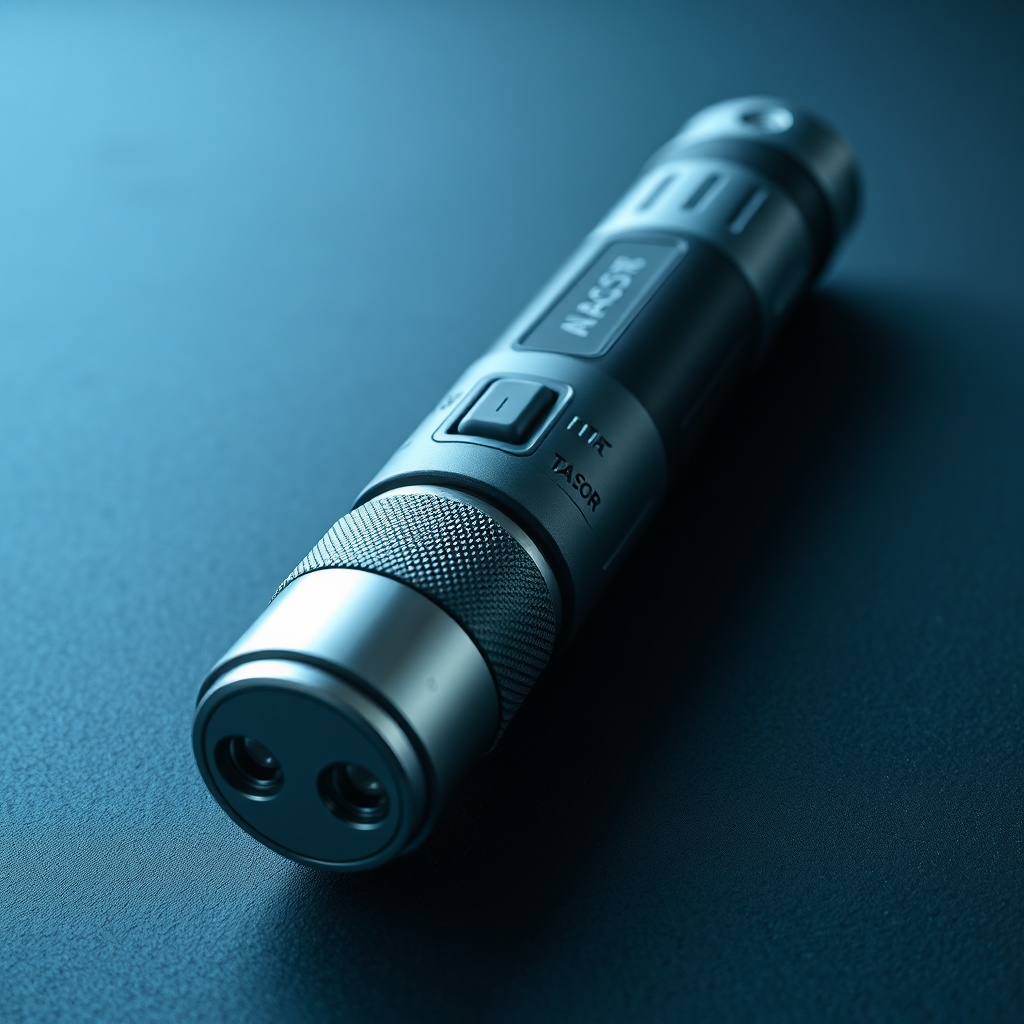
This all-in-one tactical tool merges impact striking and electrical incapacitation into a single, rapidly deployable unit for enhanced officer safety.
Definition and Core Concept
Definition: A baton and taser combination is a less-lethal device that integrates a striking baton with an electrical stun or conductive probe function, allowing the user to apply impact trauma or electrical muscle disruption from a single weapon.
The core purpose is efficiency. In a high-pressure encounter, an officer may need to strike a subject at close range and then immediately apply electrical control. With separate tools, that requires dropping or holstering one weapon and drawing the other. A combined device keeps both capabilities in hand, reducing the number of movements and the time lost between options. The intended role sits in the middle of the use-of-force continuum. A baton alone is generally considered a lower-level impact weapon, while a taser provides electrical incapacitation at short range. The combination bridges those two tiers, offering an officer a graduated response without changing tools. It is important to distinguish between a baton with a taser attachment and a true integrated combination. Some products are simply a standard baton with a stun module affixed to the handle, while others are designed from the ground up as a unified system. The integrated design typically places the electrical contacts and trigger in positions that allow operation without altering the grip.
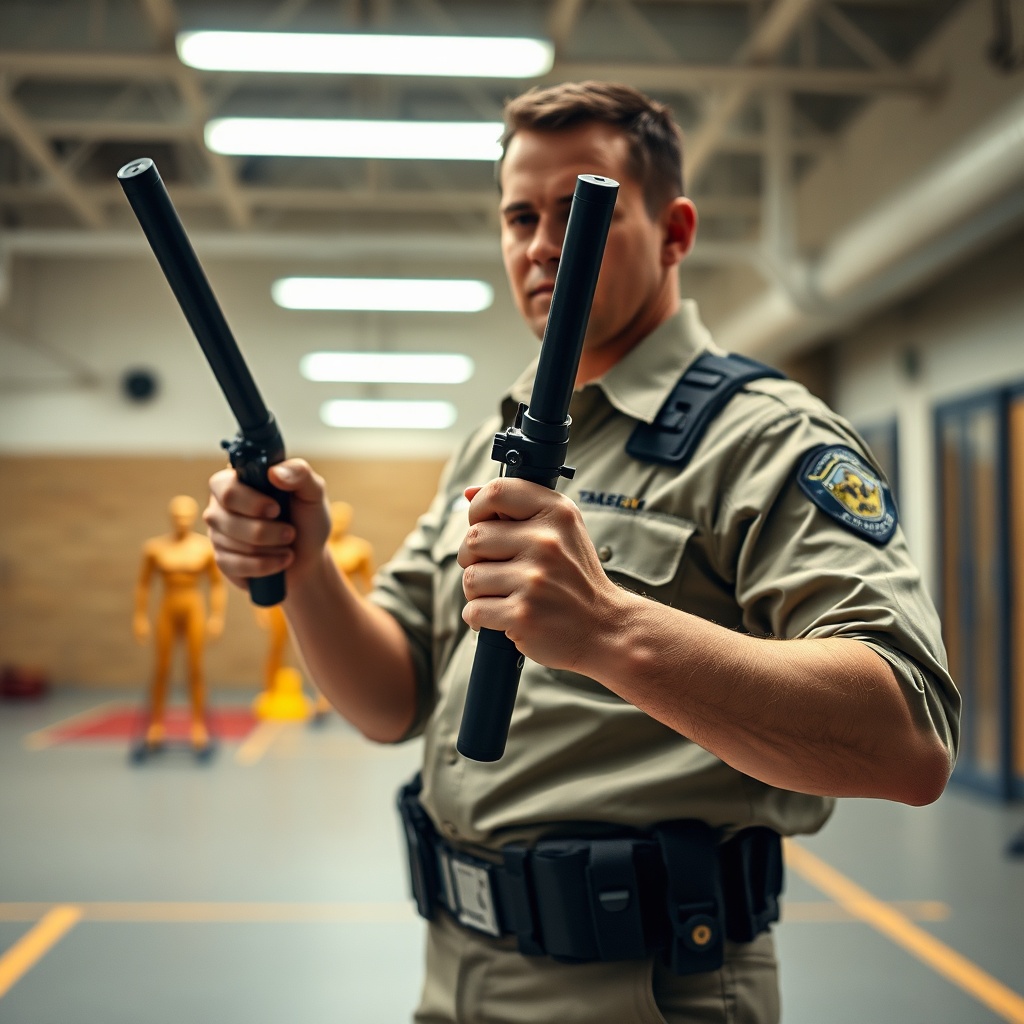
Proper training ensures users can safely transition between impact strikes and electrical discharge when deploying an integrated less-lethal system.
How the Combination Works in Practice
The operational sequence usually begins at close range. The baton function is used for impact strikes — the same mechanical action as a standard baton. If the officer needs electrical incapacitation, they activate the taser function, which delivers an electrical discharge either through contact electrodes built into the device or via conductive probe taser technology that launches barbed probes into the subject.
Quick Answer: In practice, the user can strike with the baton end and then activate the electrical function without re-gripping, which is the main advantage over carrying two separate tools.
The advantage of having both capabilities available without changing grip or drawing a second device is significant in close-quarters encounters. A subject who is actively resisting may not give the officer time to holster a baton and draw a taser. The integrated design keeps the officer’s hand on one weapon while switching between mechanical and electrical modes. Some designs aim to allow overlapping functions — for example, using the electrical discharge while maintaining baton control. This is a design goal rather than a confirmed feature across all products, and it should be verified with the specific manufacturer before relying on it in a tactical situation. The effectiveness of the electrical function depends on proper contact or probe placement. An electric shock baton is only effective if the electrodes reach the subject’s body, which is why training on angle, distance, and target zones is critical. The baton component, by contrast, is more forgiving because it relies on mechanical force rather than electrical conduction.
Legal and Regulatory Considerations
Jurisdictional Differences in Carry Laws
The legality and availability of personal security tools in the US varies widely; some regions treat these as tasers, others as impact weapons, and some restrict them entirely. Legal restrictions on taser batons are not uniform. Some jurisdictions classify these devices as tasers, which may be restricted to law enforcement or require a permit for civilian ownership. Others classify them as impact weapons or general less-lethal devices, which may fall under different rules. A few regions restrict taser ownership entirely, regardless of whether it is integrated into a baton. This classification matters because it determines who can legally carry the device and under what conditions. A device that is legal for a police officer may be illegal for a security guard or a civilian. The same physical product can be treated differently based on the user’s role and the local statute. Before purchasing or carrying a baton and taser combination, check the laws in your specific jurisdiction. Do not rely on general statements about “less-lethal weapons” — the regulations are often detailed and may vary between states, provinces, or even municipalities.
Use-of-Force Continuum Placement
Within law enforcement impact weaponry, the use-of-force continuum typically progresses from verbal commands to physical control, then to intermediate weapons like OC spray, batons, and tasers, and finally to lethal force. A combined baton and taser device sits between the baton-only and taser-only tiers, offering both impact and electrical options from a single tool. Having two incapacitation methods in one device can complicate the escalation and de-escalation decision. An officer must decide not only whether to use force, but which function to activate. This adds a cognitive step that is absent when carrying a single-purpose tool. Department policy and agency guidelines are critical in defining when each function may be used, and officers must be familiar with those rules before deployment.
Selecting the Right Combined Device
Key Features to Evaluate
When choosing a baton and taser combination, several features matter more than the simple presence of both functions.
- Ergonomic grip and balance: Adding taser components changes the weight distribution of the baton. A device that feels balanced when held in a training environment may feel different during a dynamic encounter.
- Activation reliability: The electrical function should not be triggered accidentally during a strike, and it should not fail when the device is subjected to impact. Look for safety mechanisms on combo devices that prevent unintentional discharge.
- Battery and maintenance: The taser component requires a power source. A durable Stun Gun requires regular charging and inspection. An unpowered taser reduces the device to a baton only, which defeats the purpose of the combination.
- Length and weight trade-offs: A combined device is typically heavier and longer than a standard baton. This can slow draw speed and increase fatigue during extended carry.
- Durability: The device must withstand the rigours of impact use without damaging the electrical components. Weather resistance is also a consideration for outdoor deployments.
Comparison Table: Baton vs. Taser vs. Combination
| Feature | Standalone Baton | Standalone Taser | Baton + Taser Combination |
|---|---|---|---|
| Primary incapacitation method | Impact trauma | Electrical muscle disruption | Both impact and electrical |
| Deployment speed | Immediate for close range | Requires aiming and trigger | Integrated, but may require mode switching |
| Legal classification | Varies widely | Often restricted | Varies — check local laws |
| Training complexity | Moderate | High | Higher — two systems in one tool |
| Situational flexibility | Limited to contact range | Effective at short range | Dual capability in one device |
| Failure risk | Mechanical failure (rare) | Probe/contact failure | Combined failure modes — more to go wrong |
This comparison highlights the core trade-off. The combination offers more flexibility, but it also demands more from the user in terms of training, legal awareness, and maintenance. Consult a Comprehensive Guide to understand these operational requirements better.
Training and Deployment Strategies
Step-by-Step: Integrating the Combination into a Response Protocol
- Assess the threat level and determine whether the baton function, the taser function, or a combined response is appropriate based on the subject’s behaviour and distance.
- Establish a safe distance — the taser component may allow engagement before baton contact is possible, giving the officer more options at the edge of the encounter.
- If using the baton function first, maintain a stable grip that allows quick access to the taser trigger without re-gripping.
- If using the taser function, be prepared for the baton to act as a secondary control tool after the electrical discharge stops.
- After any deployment, conduct a post-incident review to identify which function was used and whether the transition was smooth.
Common Mistakes and Mitigation
One of the most common errors is relying on the taser component as a “magic bullet” and neglecting baton strikes. The electrical function is not guaranteed to work in every situation — poor probe placement, thick clothing, or battery failure can render it ineffective. Officers must remain proficient with the baton function as a primary tool. Another mistake is failing to account for the added weight and length of the combination device. A heavier tool slows draw speed and can cause fatigue during extended shifts. Practice drawing and deploying the device under realistic conditions to build muscle memory. Overlooking the need for regular taser battery checks is also a serious issue. A rechargeable electric baton battery should be inspected on a schedule, and the device should be tested to confirm the electrical function is operational. An unpowered taser is just a heavy baton. Finally, training with the baton and taser functions separately — rather than as one integrated system — undermines the purpose of the combination. Empowering Yourself: The Use of Non-Lethal Self-Defense Tech emphasizes the critical nature of scenario-based drills. The user must practise switching between modes fluidly, just as they would in a real encounter.
Quick Answer: The most effective training approach treats the combination as one system, not two separate tools, because the transition between impact and electrical modes is the primary skill to master.
Situational Advantages and Limitations
When the Combination Excels
The combination shines in close-quarters encounters where an officer may need to strike and then immediately apply electrical control. A subject who is actively resisting at arm’s length may not give the officer time to transition between separate weapons, making the integrated device a practical advantage. Crowd-control or disturbance scenarios also benefit from a single, versatile tool. Carrying fewer items reduces the load on the officer and simplifies the equipment checklist. When multiple officers are deployed, a standardised combination device can streamline training and operational consistency. Situations where the officer cannot safely transition between separate baton and taser due to time pressure are the strongest use case. The combined device keeps both options in hand, eliminating the need to holster one weapon and draw another.
Scenarios Where Separate Tools Are Preferable
There are situations where separate tools are the better choice. If the taser component’s battery or probe function is not needed, a lighter, simpler baton is more efficient. The added weight and complexity of the combination serve no purpose in a routine patrol where electrical incapacitation is unlikely. When legal restrictions make the combined device unapproved, but a baton alone is permitted, separate tools may be the only viable option. This is particularly relevant for civilians and private security personnel who may face stricter regulations. If the officer’s training has focused on separate tools, introducing a combination device could introduce unproven risk. Switching to a new system without adequate practice can degrade performance in a critical moment. The safest approach is to train extensively with any new tool before carrying it operationally.
Frequently Asked Questions (FAQ)
Is a baton and taser combination legal to carry?
Legality depends entirely on your jurisdiction and your role. Law enforcement officers may be authorised to carry these devices, while civilians and security personnel may face different restrictions. Some regions classify the device as a taser, others as an impact weapon, and some restrict it entirely. Always verify local laws before purchasing or carrying.
Can you use the baton and taser functions at the same time?
Most designs allow either/or use — you can strike with the baton or activate the electrical function, but not necessarily both simultaneously. Some designs may permit simultaneous operation, but this is a design-specific feature that should be confirmed with the manufacturer before relying on it.
What are the main benefits of a combined baton and taser over carrying two separate devices?
The key advantages are reduced equipment load, faster transition between functions, and simplified training if the device is practised as a single system. The officer carries one tool instead of two, which reduces the number of movements required in a high-pressure encounter.
How much training is required to use a baton and taser combination effectively?
Training requirements are higher than for a standard baton because the user must master two different incapacitation methods and the switch between them. Practical, scenario-based training is essential — not just range time or basic familiarisation. The specific number of training hours will depend on the agency’s requirements and the user’s prior experience. Related reading: [Understanding Stun Guns vs Tasers: A Comprehensive Guid](https://cheetahstunguns.com/2026/07/11/understanding-stun-guns-vs-tasers-a-comprehensive-guide/) · [The legality and availability of personal security tool](https://cheetahstunguns.com/2025/01/09/the-legality-and-availability-of-personal-security-tools-in-the-us/) · [Cheetah Baseball Bat Flashlight Stun Gun](https://cheetahstunguns.com/product/cheetah-baseball-bat-flashlight-stun-gun/) · [Empowering Yourself: The Use of Non-Lethal Self-Defense](https://cheetahstunguns.com/2025/12/14/empowering-yourself-the-use-of-non-lethal-self-defense-techniques/) · [Comprehensive Guide to Non-Lethal Defense Systems for I](https://cheetahstunguns.com/2026/03/15/comprehensive-guide-to-non-lethal-defense-systems-for-individuals/) · [Exploring the Latest Cheetah Stun Gun Models: Effective](https://cheetahstunguns.com/2026/03/15/exploring-the-latest-cheetah-stun-gun-models-effectiveness-and-features/)
Conclusion
A baton and taser combination offers a compact, dual-capability less-lethal tool that can reduce transition time in high-pressure encounters. By merging impact and electrical incapacitation into a single device, it gives officers and security professionals two response options without the need to switch weapons. However, the decision to adopt such a tool is not simple. Legal, training, and situational factors determine whether the combination is the right choice for a given role. Always verify local regulations before purchasing or carrying a baton and taser combination. Invest in dedicated integrated training that treats the device as one system, not two separate tools. And evaluate the device on real-world reliability — ergonomics, activation performance, battery maintenance, and durability — rather than just the presence of two features. Recent best Exploring the Latest Cheetah Stun Gun Models: Effective analyses confirm these design priorities. For proper handling and storage guidelines, follow the manufacturer’s instructions and your agency’s policy. Store the device in a secure location, keep the battery charged, and conduct regular function checks. A well-maintained combination device is a reliable tool; a neglected one is a liability.

