

When people talk about personal safety devices, stun guns vs tasers are often mentioned in the same breath — but they are fundamentally different tools. The most important distinction is simple: a stun gun requires direct physical contact to deliver a shock, while a taser fires a projectile that delivers the shock from a distance. That single difference shapes everything else — How Do you use them, where you can carry them, and which one makes sense for your situation.
Quick Answer: A stun gun is a contact-only device that shocks when pressed against a target. A taser is a projectile device that fires barbed darts connected by wires, delivering the shock from a distance.
Key Takeaways
- Stun guns require direct contact; tasers deliver a shock from a distance.
- The legality of each device varies significantly by jurisdiction — always verify local laws.
- A stun gun is generally simpler and more affordable, while a taser offers standoff capability.
- Neither device is a guaranteed stop; training and situational awareness are essential.
- Choose based on your specific self-defense needs, not on marketing claims.
The Complete Answer: Stun Guns vs. Tasers — What’s the Real Difference?
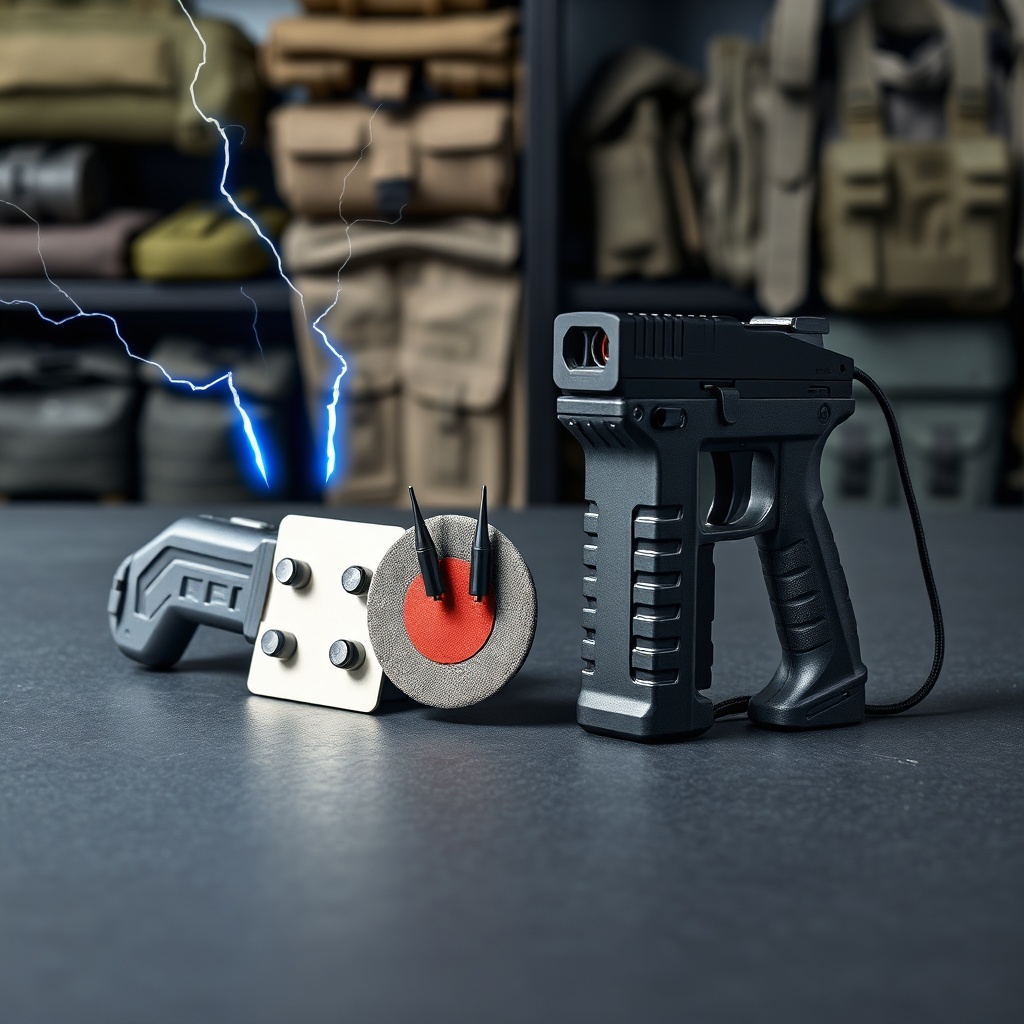
Understanding whether you need direct-contact shock delivery or long-range projectile deployment is essential when choosing between stun guns vs tasers.
Defining the Terms
Stun gun: A handheld device that delivers an electrical shock through direct physical contact. You must press the device against the target for the current to flow. The effect is primarily pain compliance — the shock causes intense discomfort that discourages the attacker from continuing. Taser: A device that uses a compressed-gas cartridge to launch two barbed probes connected to the device by thin wires. When the probes make contact, an electrical current travels through the wires and into the target. The effect is neuromuscular incapacitation (NMI), which temporarily disrupts the body’s ability to control muscle movement.
Definition: Neuromuscular incapacitation (NMI) is a physiological effect where an electrical current overrides the nervous system’s signals to muscles, causing involuntary muscle contraction and loss of motor control.
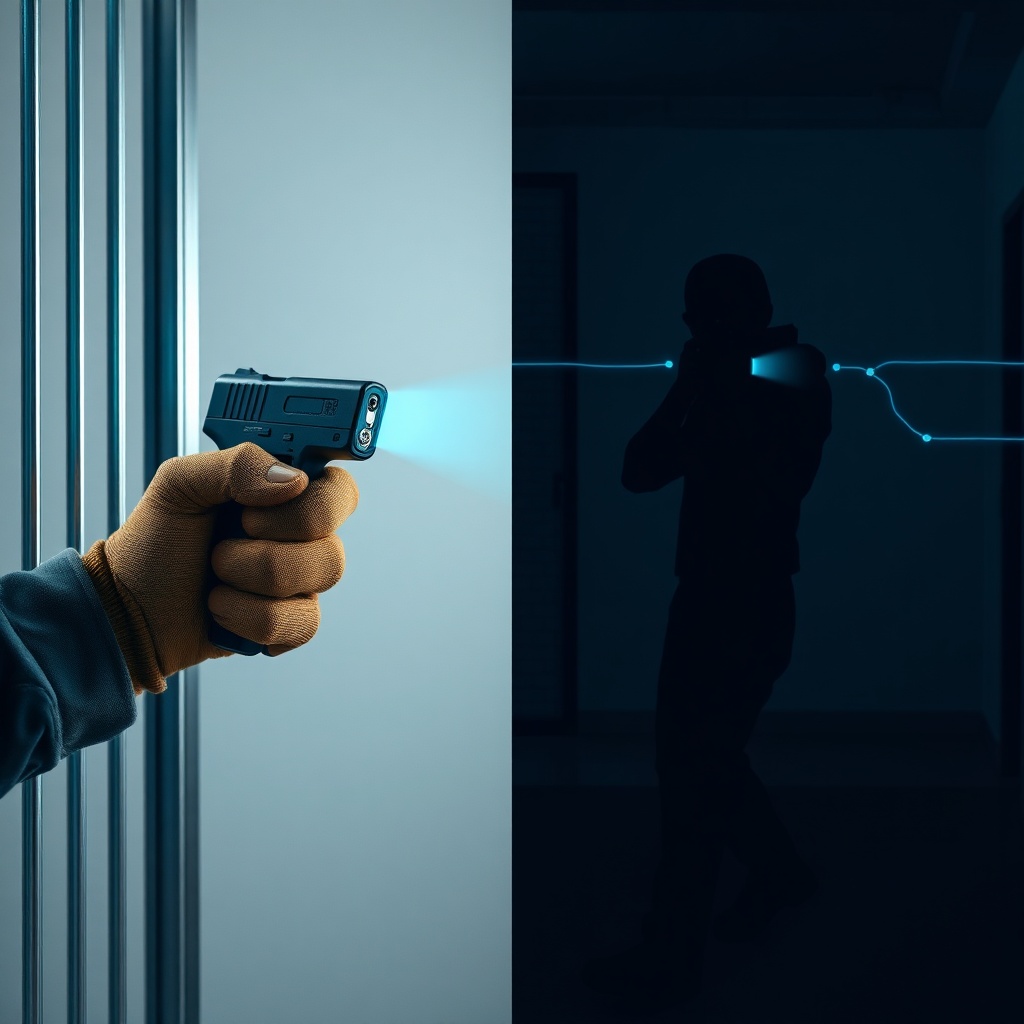
Selecting the right personal protection tool depends on whether your situation requires close-quarters engagement or secure distance management.
The Core Differences at a Glance
The practical differences between the two devices go far beyond their mechanisms. A stun gun is a close-quarters tool — you need to be within arm’s reach and maintain contact long enough for the shock to be effective. A taser gives you a safety buffer, allowing you to defend yourself before an attacker closes the distance. Reusability also differs. Stun guns are typically rechargeable and can be used repeatedly. Tasers require a new cartridge after each use because the probes and wires are expended. That means a taser has an ongoing cost beyond the initial purchase. Training requirements differ too. A stun gun is relatively straightforward — press and hold. A taser requires more practice to aim accurately under stress, and you need to understand how to handle the device after firing, including managing the wires.
Comparison Table
| Feature | Stun Gun | Taser |
|---|---|---|
| How It Works | Direct contact required | Projectile with wire connection |
| Range | Contact only | Distance (varies by model) |
| Effect | Pain compliance | Neuromuscular incapacitation |
| Reusability | Rechargeable, reusable | Requires new cartridge after use |
| Best For | Close-quarters defense | Standoff defense |
| Legal Restrictions | Varies by jurisdiction | Varies by jurisdiction |
How They Work: The Science Behind the Shock
The Mechanics of a Stun Gun
A stun gun works by generating a high-voltage, low-amperage electrical discharge between two metal prongs on the device. When you press those prongs against a person’s body, the current passes through the skin and muscle tissue. The result is intense pain that typically causes the target to pull away or stop what they’re doing. The key limitation is that the electricity must have a path through the body. That means you need sustained, direct contact. A quick tap might startle, but it won’t produce the same effect as holding the device against the target for a second or more. Clothing can also reduce the effectiveness of some models, though many stun guns are designed to work through light clothing.
The Mechanics of a Taser
A taser functions differently. When you pull the trigger, a cartridge launches two probes that travel toward the target. Each probe is attached to the device by a thin, conductive wire. When both probes make contact — or one makes contact and the other grounds against the body — the circuit is complete and the current flows. This current is designed to interfere with the nervous system’s signals to skeletal muscles. The result is neuromuscular incapacitation: the target’s muscles contract involuntarily, and they may lose the ability to stand, hold a weapon, or continue advancing. This is a fundamentally different effect from the pain compliance of a stun gun.
Why the Difference in Mechanism Matters
The mechanism determines how you use the device in a real encounter. With a stun gun, you must let an attacker get close enough to touch. That’s a significant risk — if you’re already within arm’s reach, you may be in danger before you can deploy the device. A stun gun works best when you have time to react and can create the space needed to press it against the target. With a taser, you have the advantage of distance. But that distance comes with a trade-off: you need to aim accurately. If you miss with the probes, you’ve used your cartridge and have no backup unless you carry spares. The wires also create a physical connection between you and the target after firing, which can be a complication if the attacker falls toward you or if the wires need to be managed.
Legal Landscape: Where You Can and Cannot Carry
Federal vs. State Regulations
The laws governing stun guns and tasers are not uniform. In the United States, states have the authority to regulate these devices, and their approaches vary widely. Some states treat stun guns and tasers as legal self-defense tools with few restrictions. Others have stricter rules, including bans, permit requirements, or restrictions on where you can carry them. Because the legal landscape is so fragmented, you cannot assume that a device that’s legal in one state is legal in another. Even within a state, local ordinances may impose additional restrictions. This is one area where you should never rely on general advice — you need to check the specific laws in your jurisdiction.
Quick Answer: Are stun guns and tasers legal? It depends entirely on where you live. Some jurisdictions allow them freely, others require permits, and some restrict or prohibit them. Always verify your local laws before purchasing.
Travel and Transportation Rules
Traveling with an electroshock device adds another layer of complexity. Airline and airport security rules can differ from state and local laws. If you’re flying, you need to understand what’s allowed in checked baggage versus carry-on luggage, and whether the device must be declared. General advice is to check with the relevant transportation authority before you fly. Rules can change, and what was permitted last year may not be permitted now. If you’re While Traveling across state lines, also remember that the legality of the device at your destination matters, not just where you started.
What to Check Before You Buy
Before purchasing a stun gun or taser, run through this checklist:
- Confirm that the device is legal to own and carry in your state and local jurisdiction.
- Check whether there are age restrictions or licensing requirements.
- Understand how you’re allowed to carry it — open carry, concealed carry, or both.
- Verify that the device meets any technical or labeling requirements your jurisdiction imposes.
- Review the manufacturer’s warranty and customer support options.
Choosing the Right Tool: A Practical Decision Framework
Step-by-Step Decision Process
- Assess your environment and typical risk scenarios. Are you walking alone at night in a city, or are you primarily concerned about home defense? Your daily routine shapes which tool makes sense.
- Determine whether you need standoff distance or close-quarters defense. If you want to keep an attacker at a distance, a taser is the better choice. If you want a simple, reliable tool for close encounters, a stun gun may suffice.
- Research the legal restrictions in your area. This step comes before any purchase decision. A device that’s illegal where you live is not an option, regardless of its merits.
- Consider your budget and maintenance needs. Comparing the 10 Best options reveals that a taser costs more over time because each use requires a new cartridge. A stun gun is a one-time purchase with minimal ongoing cost.
- Evaluate training requirements and your willingness to practice. Taser users should practice aiming and handling. Stun gun users should practice deploying the device quickly and holding it in place.
- Test the device for comfort and ease of use. A self-defense tool is only useful if you can handle it confidently. Look for a device that fits your hand, has accessible controls, and feels natural to draw.
Use Cases and Situational Fit
Home defense: A stun gun can be a good option because you’re in a familiar environment and can control the space. A taser offers the advantage of keeping an intruder at a distance, but you need to consider the risk of the wires and the need for a clear line of sight. Everyday carry: Many people prefer a stun gun for everyday carry because it’s compact, rechargeable, and doesn’t require cartridges. A taser is bulkier and has ongoing costs, but it provides a standoff option that some people find worth the trade-off. Walking at night: If you’re concerned about someone approaching you, a taser’s distance advantage can be valuable. However, you need to be prepared to aim and fire under stress. A stun gun requires you to wait until someone is close, which is a different kind of risk. High-risk situations: For people who face elevated risks — such as those working in certain professions or traveling through areas with higher crime rates — the standoff capability of a taser can be the deciding factor. The ability to stop an attacker before they reach you is a significant advantage.
Training and Familiarity Considerations
Training is the difference between owning a self-defense tool and actually being able to use it. With a stun gun, practice helps you build the muscle memory to draw, deploy, and press the device against a target — even when your hands are shaking. With a taser, training is even more critical. You need to practice aiming at a target, firing the probes, and managing the aftermath using current techniques 2024 protocols. You should also understand what happens if you miss, because a missed shot means you’ve expended your cartridge and may need to switch to a different defense strategy.
Common Misconceptions and Real-World Scenarios
Myth vs. Reality: What Actually Happens
Myth: “A taser will stop anyone instantly.” The reality is more complex. While neuromuscular incapacitation is a strong effect, factors like the placement of the probes, the target’s physiology, and whether the current reaches the right muscles all matter. It’s not a guarantee. Myth: “A stun gun is useless.” This is also an oversimplification. A stun gun can be highly effective in close-quarters situations, particularly when the target isn’t expecting the shock. But it does require you to get close, and that’s a real limitation.
Effectiveness in High-Stress Situations
Under stress, your body releases adrenaline, which can increase pain tolerance. This is a critical consideration for stun guns, which rely on pain compliance. A person who is highly agitated or under the influence of drugs may not respond to pain the way you’d expect. Tasers work differently. Because they target the nervous system directly, neuromuscular incapacitation is less dependent on the target’s pain tolerance. That said, no device is a guaranteed stop in every situation. Your best defense is a combination of the right tool, training, and situational awareness.
When One Outperforms the Other
A taser is clearly the better choice when you need to stop a threat before they reach you. If you’re facing someone who is advancing from a distance, the ability to deliver a shock without letting them get close is a major advantage. A stun gun is the better choice when you want a simple, low-maintenance tool for close-quarters defense. It’s easier to carry, doesn’t require cartridges, and can be used repeatedly. For people who are confident they can create the space needed to use it, a stun gun is a practical and affordable option.
FAQ
Q1: Is a stun gun the same as a taser?
No. A stun gun requires direct contact to deliver a shock, while a taser fires a projectile connected by wires from a distance. They are different devices with different mechanisms and different use cases.
Q2: Which one is more effective for self-defense?
Effectiveness depends on the situation. A taser offers standoff distance, which can be a major advantage, but it requires accurate aiming and has ongoing cartridge costs. A stun gun is more reliable in close-quarters situations but requires you to get close. Neither is a guaranteed stop.
Q3: Are stun guns and tasers legal everywhere?
No. Laws vary significantly by jurisdiction. Some places allow them freely, others require permits, and some restrict or prohibit them. Always verify the laws in your specific state, city, and any other location where you plan to carry the device.
Q4: Do stun guns and tasers require a license?
Some jurisdictions require a permit or license to own or carry these devices, while others do not. The requirements vary widely, so you need to check your local regulations rather than relying on general advice.
Q5: Can a taser or stun gun be used on someone with a pacemaker?
Medical guidance varies, and this is a question that should be directed to a healthcare professional. If you or someone you know has a pacemaker, consult a doctor before considering any electroshock device. Related reading: [How Do Stun Guns Work? A Complete Beginner’s Guide to V](https://cheetahstunguns.com/2026/07/09/how-do-stun-guns-work-a-complete-beginners-guide-to-voltage-and-amps/) · [The legality and availability of personal security tool](https://cheetahstunguns.com/2025/01/09/the-legality-and-availability-of-personal-security-tools-in-the-us/) · [Self-Defense on the Go: How to Stay Safe While Travelin](https://cheetahstunguns.com/2023/10/16/self-defense-on-the-go-how-to-stay-safe-while-traveling/) · [10 Best Self-Defense Weapons for Runners and Joggers](https://cheetahstunguns.com/2026/07/09/10-best-self-defense-weapons-for-runners-and-joggers/) · [Self defense techniques 2024](https://cheetahstunguns.com/2024/02/18/self-defense-techniques-2024/) · [Stun Guns vs. Pepper Spray: Choosing the Right Self-Def](https://cheetahstunguns.com/2023/10/16/stun-guns-vs-pepper-spray-choosing-the-right-self-defense-tool/)
Conclusion
The difference between stun guns and tasers comes down to one core question: do you need to stop a threat from a distance, or are you prepared to defend yourself at close range? A taser gives you standoff capability and works through neuromuscular incapacitation, but it costs more to maintain and requires practice to use effectively. A stun gun is simpler, reusable, and more affordable, but it demands that you let an attacker get within arm’s reach. Before you buy anything, verify the legal status of the device in your jurisdiction. Then, choose based on your personal needs, your environment, and your willingness to train. The ideal Self-Defense Tool is the one you can carry, access, and use confidently when you need it.

