

Bear Spray vs Pepper Spray: Which to Trust?
The critical difference between bear spray and pepper spray could mean the difference between deterring a threat and facing a life-or-death situation. Many people use the terms interchangeably, assuming both are simply “pepper spray” in a different can. That confusion is dangerous. While both derive their power from capsaicinoids, bear spray and pepper spray are engineered for entirely different threats, with different chemical formulations, delivery systems, and legal implications. This guide provides a definitive answer, a detailed comparison, and practical guidance for Stun Guns vs. Pepper Spray: Choosing the Right Self-Defense Tool for your specific safety needs.
Key Takeaways
- The primary difference is concentration and range: Bear spray is formulated with a much higher concentration of capsaicinoids and is designed to be deployed as a fog at a distance of 20-30 feet, while pepper spray is a more concentrated stream for close-quarters defense.
- Bear spray is for deterring large animals, not humans: Its wide, fog-like cloud is designed to create a barrier between you and a charging bear, whereas pepper spray’s precision stream is intended for targeting a human attacker’s eyes.
- Using bear spray on a human can have serious legal consequences: In many jurisdictions, using bear spray on a person is considered a felony or a more serious crime than using standard pepper spray, as it is not classified as a self-defense weapon for human use.
- Pepper spray is a legal self-defense tool for humans: It is legal in all 50 US states (with some restrictions on size and concentration) and is designed to be carried for personal protection against people.
- Choosing the wrong one can be dangerous: Using pepper spray on a bear may not be effective enough to stop a charge, and using bear spray on a human can cause unnecessary harm and lead to legal trouble.
The Complete Answer: Bear Spray vs. Pepper Spray
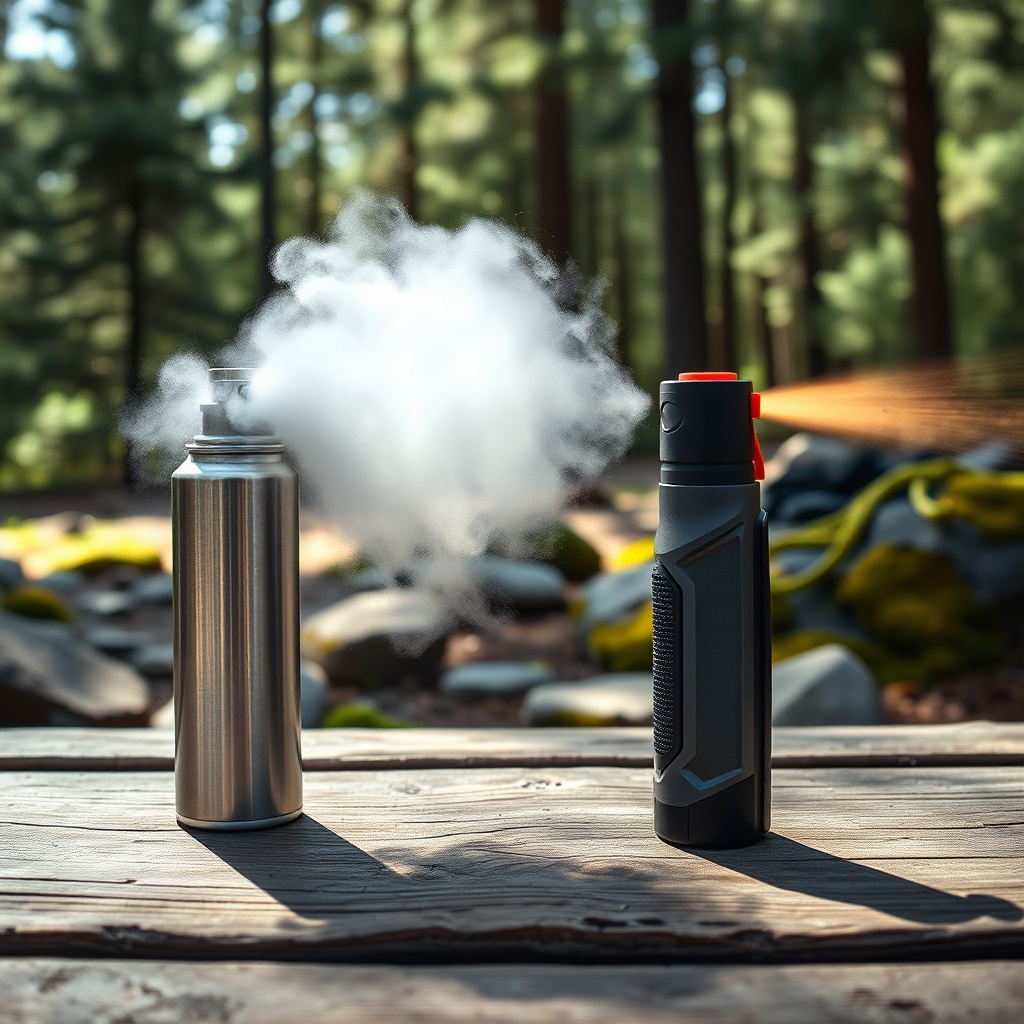
Visual breakdown of spray patterns and canister design differences for wildlife defense versus personal protection.
The Definitive Verdict
Bear spray is a high-concentration, fog-based deterrent for large animals, specifically bears. It is deployed at a distance to create a protective barrier between you and the animal. Pepper spray is a lower-concentration, stream-based self-defense tool for humans, deployed at close range for precision targeting. They are not interchangeable. Using the wrong one for the wrong threat can lead to failure, injury, or legal trouble.
Quick Answer: Bear spray is a high-concentration, fog-based deterrent for bears, while pepper spray is a lower-concentration, stream-based tool for human self-defense. They are not interchangeable.
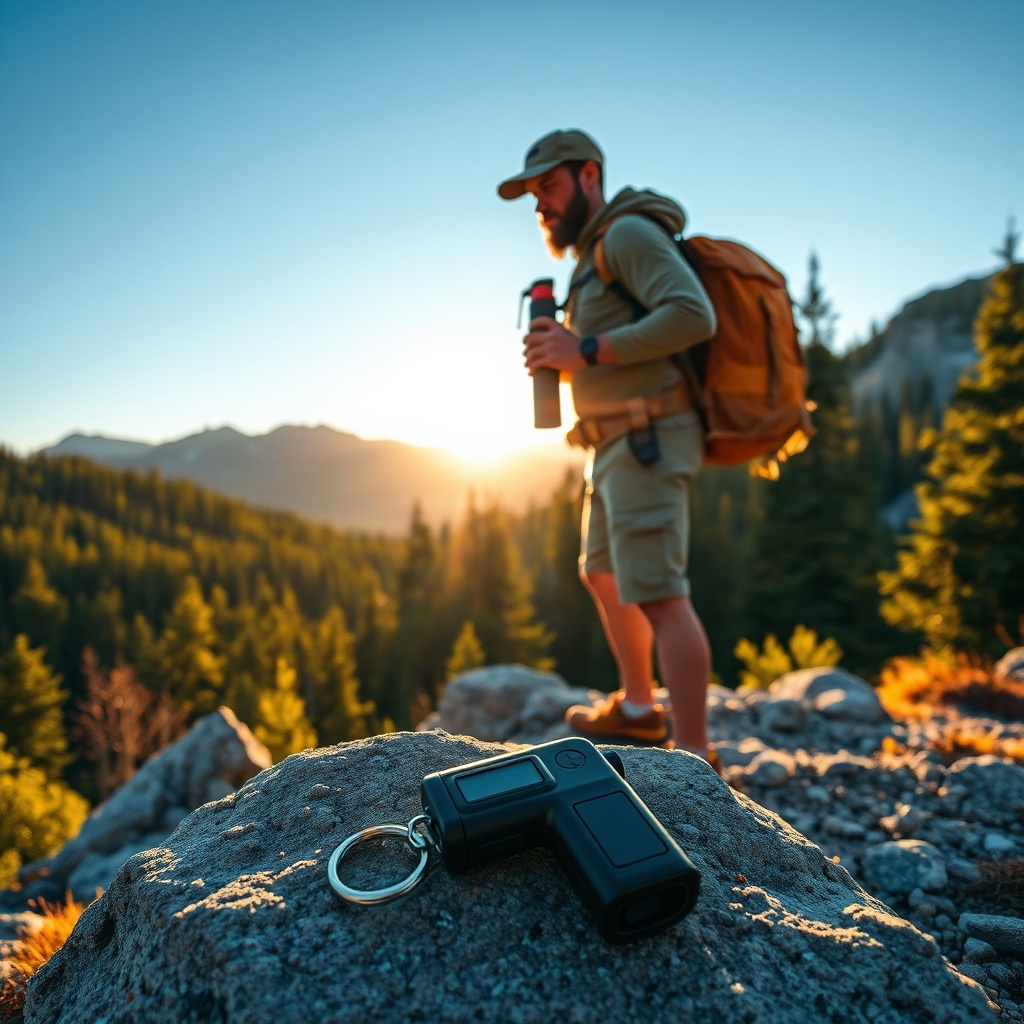
Contextual scene showing correct tool placement for wilderness travel and everyday personal security.
The Core Differences at a Glance
- Concentration: Bear spray has a higher concentration of capsaicinoids (the active ingredient) to penetrate a bear’s thick fur and skin. Pepper spray has a lower concentration, sufficient to incapacitate a human.
- Spray Pattern: Bear spray delivers a wide, dense fog cloud. Pepper spray delivers a narrow, directed stream.
- Range: Bear spray has an effective range of 20-30 feet. Pepper spray has an effective range of 6-10 feet.
Why This Distinction Matters
Using the wrong tool can lead to failure: a stream of pepper spray won’t stop a charging bear, and a fog of bear spray might not accurately target a human attacker and could blow back into your face. The legal implications are equally significant. The higher concentration of bear spray makes it a weapon for animals, and its use on humans is often treated as a more serious offense, such as assault with a deadly weapon.
Chemical Composition and Concentration: The Science of the Spray
Understanding Capsaicinoids (The Active Ingredient)
Definition: Capsaicinoids are the chemical compounds in chili peppers that produce the sensation of intense heat and pain. Understanding Stun Guns vs Tasers: A Comprehensive Guide online details how these compounds cause temporary blindness, a burning sensation, and respiratory distress when contacting the eyes, nose, or skin.
Both bear spray and pepper spray rely on capsaicinoids to incapacitate a target. When the spray contacts the eyes, nose, or skin, it causes an immediate and intense inflammatory response. This results in temporary blindness, a burning sensation on the skin, and difficulty breathing. The effect is designed to give you a window of time to escape, not to cause permanent harm.
The Concentration Difference: Why Bear Spray is Stronger
The most significant difference lies in the concentration of the active ingredient. Bear spray is formulated with a significantly higher concentration of capsaicinoids, typically in the range of 1.0% to 2.0%. This higher concentration is necessary to penetrate a bear’s dense fur and thick skin. Pepper spray, on the other hand, is usually formulated with a lower concentration, often between 0.18% and 1.33%. This lower concentration is sufficient to cause intense pain and temporary blindness in a human without the risk of severe overexposure.
The active ingredient is often measured as Oleoresin Capsicum (OC), which is the oil extract from pepper plants. While the percentage of OC is a common metric, the true measure of potency is the “Major Capsaicinoids” (MC) content, which represents the specific, most potent compounds. Bear spray is designed to deliver a much higher dose of these compounds to ensure it works on a large, powerful animal.
The Delivery System: Fog vs. Stream
The delivery system is just as crucial as the chemical composition.
- Fog: Bear spray uses a powerful propellant that creates a wide, dense cloud of spray. This fog pattern is effective for hitting a moving target and creating a barrier. When a bear charges, it runs through the cloud, inhaling the irritant and getting it in its eyes and nose.
- Stream: Pepper spray uses a propellant that creates a focused liquid stream. This stream is more accurate and less prone to blowback in windy conditions. It is designed to be aimed at a specific target, such as a human attacker’s eyes, without affecting bystanders.
Range, Spray Pattern, and Deployment: How They Are Used
The 30-Foot Barrier: Bear Spray in Action
Bear spray is designed for a specific defensive scenario: a charging bear. The intended use is to deploy a wide fog cloud between you and the charging animal. The range is critical. You need to begin spraying when the bear is 20-30 feet away to give the cloud time to form and for the bear to run into it. This creates an invisible, irritating barrier that the bear must cross. The goal is not to “hit” the bear with a stream but to make it run through a cloud of deterrent that overwhelms its senses.
The 10-Foot Stream: Pepper Spray in Action
Pepper spray is designed for close-quarters personal defense against a human threat. The intended use is to target the attacker’s eyes from a distance of 6-10 feet. The stream pattern allows for precise target acquisition. You can aim directly at the attacker’s face without the risk of the spray drifting into your own eyes or affecting innocent bystanders. This accuracy is essential in an urban setting where a wide fog could cause collateral harm.
Quick Answer: Bear spray is deployed as a wide fog from 20-30 feet away to create a barrier, while pepper spray is a precise stream deployed from 6-10 feet to target a human attacker’s eyes.
The Step-by-Step Guide to Effective Deployment
- Prepare: Have the spray in your hand with the safety off (or in a ready position) before the threat is imminent. Fumbling with a safety during a panic is a major cause of failure.
- Assess: Determine the distance to the threat (bear vs. human) and the wind direction. For bear spray, you want the wind to carry the fog toward the bear, not back into your face.
- Aim: For bear spray, aim at the bear’s head and chest; for pepper spray, aim directly at the attacker’s eyes.
- Deploy: For bear spray, use a sweeping motion to create a wide barrier; for pepper spray, use a short, precise burst.
- Retreat: Immediately move away from the threat after deployment to avoid the spray cloud or a follow-up attack.
Legal and Regulatory Considerations: The Law of the Land
The Legal Status of Pepper Spray
The legality and availability of personal security tools in the US shows that pepper spray is classified as a self-defense weapon for humans and is legal in all 50 US states, though some states have restrictions on the size, concentration, and where it can be carried. For example, it is not allowed on airplanes. It is designed to be carried for personal protection against people, and its use is generally justified when defending yourself against an imminent threat.
The Legal Status of Bear Spray
Bear spray is not a self-defense weapon for humans. It is generally legal to possess for its intended purpose: deterring bears. The crucial legal distinction is that using bear spray on a human is often a felony or a more serious crime, such as assault with a deadly weapon. This is due to its high concentration and potential for severe harm. The law views it as a weapon designed for animals, so using it on a person is seen as using excessive and dangerous force.
Quick Answer: Using bear spray on a human is generally illegal and can result in felony charges, as it is classified as an animal deterrent, not a self-defense weapon for people.
International and Travel Restrictions
The legality of carrying these sprays can vary significantly when traveling. Many national parks and wilderness areas require or strongly recommend carrying bear spray for wildlife encounters. However, transporting it across state lines or internationally can be complicated. Some countries, including Canada, have specific regulations regarding the import and possession of pepper spray and bear spray. It is essential to check the laws of your destination before traveling with either product, as they may be considered prohibited weapons.
Practical Scenarios and Choosing the Right Tool: What Should You Buy?
Scenario: Hiking in Bear Country
- Recommendation: Bear spray is the only option. It must be carried in an accessible holster, not inside a backpack.
- Key point: A bear spray deterrent is a must-have for hiking, camping, or fishing in areas with grizzly or black bear populations. You need to be able to access it instantly, and you need the range and fog pattern to stop a charge.
Scenario: Urban Self-Defense
- Recommendation: Pepper spray is the correct choice for everyday carry for Personal Security against human threats.
- Key point: It is lightweight, easy to carry, and legal for human self-defense in most jurisdictions. Its precision stream is perfect for a crowded city environment.
The Ultimate Comparison Table
| Feature | Bear Spray | Pepper Spray |
|---|---|---|
| Primary Target | Large animals (bears) | Humans |
| Active Ingredient | High concentration of capsaicinoids | Lower concentration of capsaicinoids |
| Spray Pattern | Wide, dense fog cloud | Narrow, directed stream |
| Effective Range | 20-30 feet | 6-10 feet |
| Legal Classification | Animal deterrent; not for human use | Self-defense weapon for humans |
| Legal Use on Humans | Often a felony or serious crime | Legal for self-defense (with restrictions) |
| Best Use Case | Hiking, camping, outdoor activities in bear country | Urban EDC, personal protection against attackers |
Making the Final Decision
Consider your environment and primary threat. If you live in a bear-prone area, you may need both: bear spray for outdoor activities and pepper spray for urban self-defense. Assess your daily routine and the most likely threats you will face. The right choice is the one that is legal, accessible, and designed for the specific threat you are preparing for.
Frequently Asked Questions (FAQ)
Can I use bear spray on a human for self-defense?
No. Using bear spray on a human is generally illegal and can result in severe legal consequences, including felony charges, due to its high concentration and potential for serious harm.
Is bear spray stronger than pepper spray?
Yes. Bear spray is formulated with a significantly higher concentration of capsaicinoids to penetrate a bear’s thick fur and skin, making it much more potent than standard pepper spray.
Can I use pepper spray on a bear?
It is not recommended. The lower concentration and narrow stream of pepper spray are unlikely to be effective at stopping a charging bear, as it may not penetrate the bear’s fur or create the wide barrier needed to deter it.
Is it legal to carry bear spray for self-defense?
No. Bear spray is classified as an animal deterrent, not a self-defense weapon. Carrying it for the purpose of self-defense against humans is illegal in many jurisdictions and can be treated as a weapons charge.
Which one should I carry for hiking in the mountains?
If you are hiking in an area with bears, you should carry bear spray. It is specifically designed for that environment and is the only effective deterrent against a bear charge.
Conclusion
The key difference is clear: bear spray is a high-concentration animal deterrent with a wide fog pattern for long-range use, while pepper spray is a lower-concentration human self-defense tool with a precise stream for close-range use. Choosing the right tool for the right threat is essential for your safety and your legal protection. Assess your environment, understand the laws in your area, and make an informed decision. Whether you are facing a bear on a mountain trail or a threat on a city street, carrying the correct tool is the first step in ensuring you can defend yourself effectively.

